
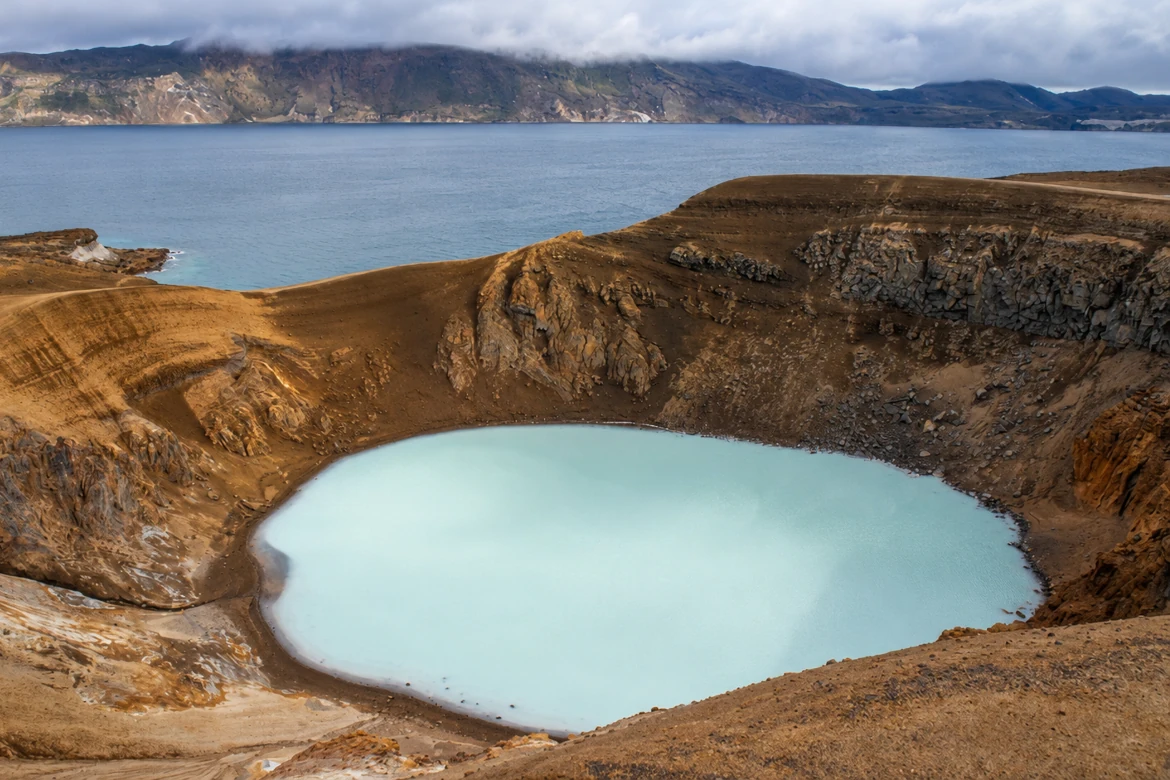
Crater lakes in Iceland are among the country’s most unusual natural sights, combining volcanic landscapes, colourful water and dramatic scenery.
These lakes are not all alike. Some are enormous and surrounded by empty Highland scenery, some are small and brightly coloured, and others sit among lava fields that make the whole landscape feel almost unreal.
What makes these places interesting for travellers is the variety. You can stand beside a deep blue lake in the middle of the Highlands, look into a red volcanic crater in the south, or see green water surrounded by steaming ground in the north. Each lake has its own setting and atmosphere.
Here are seven crater lakes that show just how different Iceland can look.
Öskjuvatn at Askja
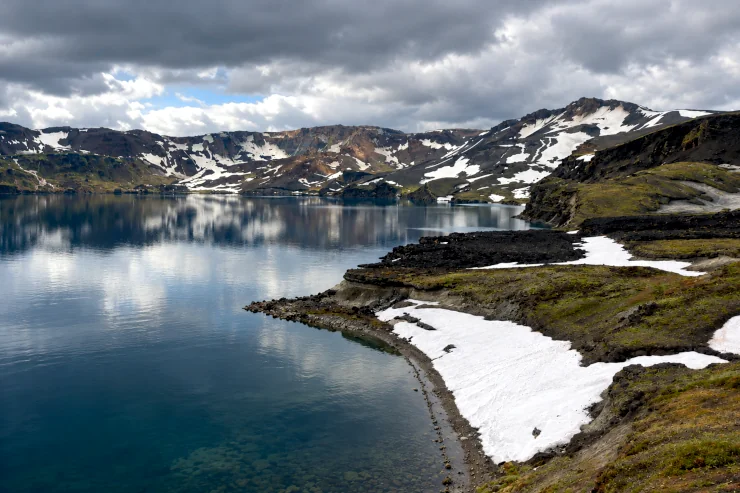
Öskjuvatn is the lake to choose if you want to see Iceland at its most remote and dramatic.
It lies deep in the central Highlands, where the landscape is wide, quiet and almost completely free of trees. Dark volcanic ground stretches towards mountains and lava fields, while the huge lake adds a deep blue or grey colour to the scene.
The scale is what makes the first impression. Öskjuvatn is a large lake, and its surroundings make it seem even bigger. There are few familiar signs of civilisation here, so the landscape feels very different from the more visited parts of Iceland.
Weather can change the atmosphere quickly. Sunshine can bring blue tones to the water, while clouds can make the lake look much darker. Snow may remain on the surrounding ground even when lower parts of Iceland are green.
The lake is also part of the wider Askja landscape, so it is worth looking beyond the water. The surrounding volcanic mountains, barren slopes and distant horizons are an important part of the experience.
If you like places that feel wild rather than polished, Öskjuvatn is one of Iceland’s most memorable crater lakes.
Víti at Askja
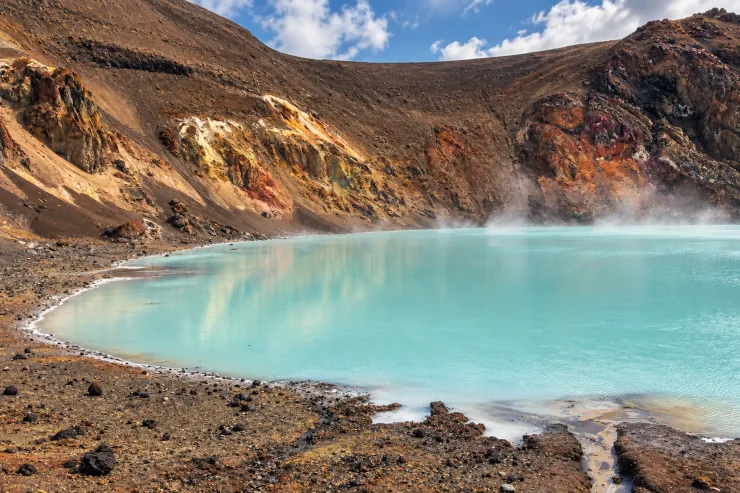
Víti at Askja is a very different sight from the huge Öskjuvatn. Instead of a vast open lake, you find a relatively small crater with colourful water surrounded by steep volcanic ground.
The contrast is the main attraction. The blue-green water sits inside dark, rough terrain, creating a scene that looks almost painted. Depending on the weather and light, the colour of the lake can appear brighter or deeper.
The crater is also an interesting place to appreciate the scale of the Askja landscape. From a small volcanic feature, you can look out towards a much larger environment of lava, mountains and empty Highland terrain.
Víti has a dramatic name: in Icelandic, it means “hell”. There is nothing unusual about this name in Iceland’s volcanic landscape, and another famous Víti can be found at Krafla. The two places are easy to confuse when planning a trip, so checking the location is important.
The surrounding landscape is cold, remote and exposed. Snow can stay around Askja for a long time, and the weather can make the area feel completely different from one visit to another.
Víti at Askja is especially appealing if you enjoy unusual natural colours and dramatic volcanic scenery rather than simply looking for a large lake.
Kerið at Grímsnes
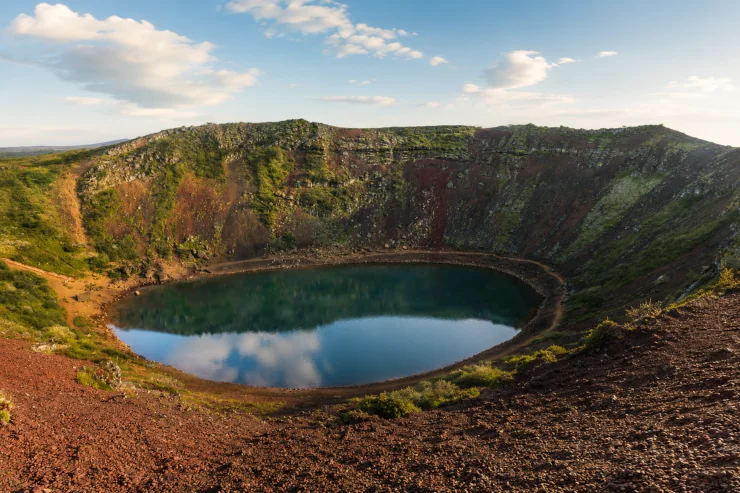
Kerið is probably the easiest crater lake on this list to recognise. Its red volcanic slopes surround a bright blue-green lake, creating a strong combination of colours that looks very different from the dark lava landscapes usually associated with Iceland.
The crater has an oval shape, and the lake lies at the bottom. Green vegetation appears on parts of the slopes, adding another colour to the scene. On a clear day, the combination of red, green and blue can be particularly striking.
Kerið also has a more compact feel than the Highland crater lakes. You can take in the shape of the whole crater without looking across a huge wilderness. This makes it an interesting place for travellers who want to see a volcanic landscape on a smaller scale.
Its location in south Iceland also makes the surrounding scenery different from Askja or Veiðivötn. Instead of feeling completely isolated, Kerið forms part of a wider landscape of farms, roads, volcanic features and popular natural sights.
One of the best things about Kerið is simply looking at the details. Notice the different colours in the crater walls, the shape of the slopes and the way the water changes with the light.
Kerið proves that a crater lake does not need to be enormous to make a strong impression.
Víti at Krafla
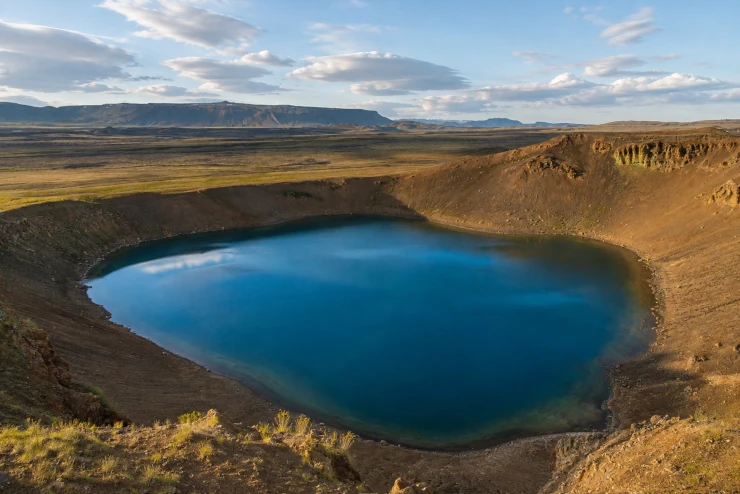
Víti at Krafla is one of the most unusual crater lakes to visit in north Iceland because the lake is only one part of a much larger volcanic landscape.
The water has a turquoise blue appearance, while the crater walls and surrounding ground have dark, brown and reddish tones. But the scenery does not stop at the edge of the crater. Around Krafla, you can also see lava fields, geothermal features and other signs of volcanic activity.
This gives Víti a different atmosphere from the quiet crater lakes of the Highlands. The landscape around Krafla feels active and energetic. Even without an eruption, steam, heat and unusual colours remind you that volcanic forces are still present underground.
The area is close to Lake Mývatn, one of northern Iceland’s most interesting regions for natural scenery. This makes Krafla a useful stop for travellers who want to combine volcanic landscapes with the many other sights around Mývatn.
The name Víti means “hell”, just like the Víti at Askja. Despite the shared name, the two places look quite different because their surroundings are different.
At Krafla, the best way to appreciate the crater is to look at the whole landscape rather than only the water. The lake, volcanic ground, lava and geothermal activity all belong to the same striking scene.
Grænavatn at Krýsuvík
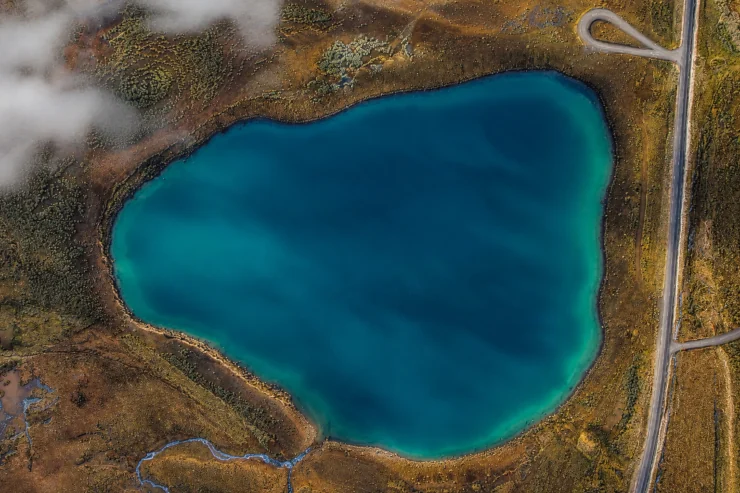
Grænavatn is smaller and quieter than many of the famous crater lakes in Iceland. Its name means “Green Lake”, and its unusual water colour is one of the main reasons it attracts attention.
The lake lies in the Krýsuvík area on the Reykjanes Peninsula, where volcanic and geothermal landscapes appear close together. The colours around the lake can be surprisingly varied. Green water sits among brown, red and grey volcanic slopes, while patches of vegetation add softer tones.
The setting is particularly interesting because Reykjanes feels different from Iceland’s central Highlands. Here, volcanic landscapes are mixed with roads, coastal scenery and geothermal areas. The peninsula is also one of the parts of Iceland where the effects of movement beneath the Earth’s surface are especially visible.
Grænavatn is a good example of a smaller attraction that can be rewarding precisely because it is not enormous. You can see the crater, lake and surrounding landscape together, making it easy to appreciate how the different elements fit.
If you are exploring Reykjanes and want something different from the better-known geothermal sites, Grænavatn offers a quieter volcanic scene.
Its green water also makes it one of the easiest crater lakes to remember. The name is simple, but it describes exactly what makes the lake stand out.
Ljótipollur at Veiðivötn
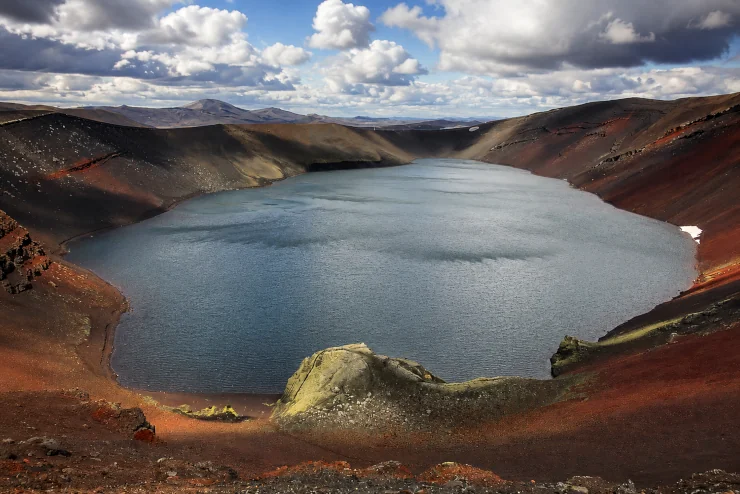
Ljótipollur has one of the more amusing names among Iceland’s natural attractions. Its name means “Ugly Pond”, but the landscape around it is anything but ugly.
The lake sits inside a colourful volcanic crater in the Highlands. Red and brown slopes rise around the water, while green vegetation appears in places where the landscape has had time to recover. The lake itself can show green or blue tones, depending on the conditions.
What makes Ljótipollur particularly interesting is its wider setting. It belongs to Veiðivötn, an extensive landscape containing many volcanic craters and lakes. This means the journey is not really about seeing one lake. The surrounding volcanic scenery is part of the attraction.
The area feels remote and open, with broad views and very little development. Compared with the more compact Kerið, Ljótipollur gives you a stronger sense of being surrounded by the Icelandic Highlands.
The colours are worth paying attention to. Red volcanic ground, dark lava, green plants and blue-green water can appear within the same view. This is one reason Iceland’s volcanic landscapes often look more colourful than visitors expect.
Ljótipollur is a good choice for travellers who enjoy dramatic scenery and places that feel far removed from everyday life.
Tjarnargígur at Lakagígar
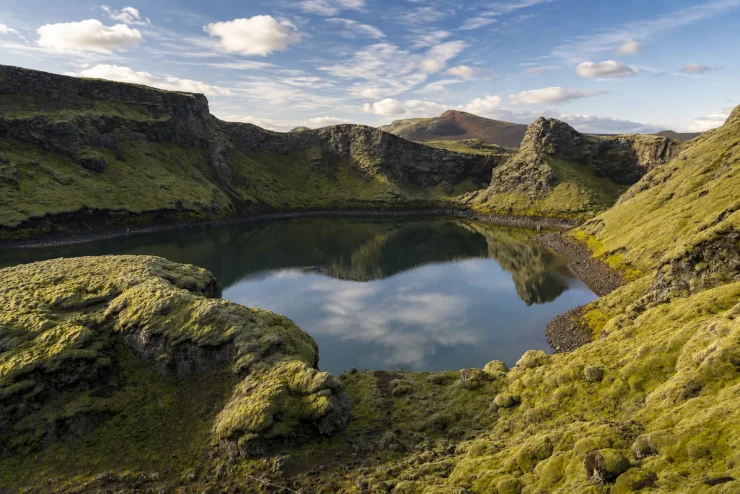
Tjarnargígur is a smaller and less famous crater lake, but its surroundings make it worth knowing. It lies within Lakagígar, a huge volcanic landscape in southern Iceland where a long line of craters rises from extensive lava fields.
Here, the lake is only one small part of the picture. The real attraction is the combination of water, volcanic cones, rough lava and wide open views. Looking across the landscape, it is easier to appreciate how much ground volcanic activity can transform.
Tjarnargígur also offers a different kind of crater-lake experience from Kerið or Víti. There is no single bright-coloured lake surrounded by a compact crater that dominates the view. Instead, the small lake belongs to a much larger landscape where volcanic features continue into the distance.
Moss and vegetation have slowly appeared on parts of the old lava, creating a contrast between living green surfaces and dark volcanic rock. This gives the area a sense of age and change: what was once a harsh volcanic landscape is gradually becoming part of Iceland’s natural ecosystem.
The Lakagígar area is particularly rewarding for travellers who enjoy landscapes rather than individual viewpoints. Take time to look beyond the lake and notice the repeated craters, lava formations and changing colours.
Tjarnargígur may not be the most famous lake on this list, but it helps show the enormous scale and variety of Iceland’s volcanic countryside.
Seeing Iceland Through Its Crater Lakes
These seven lakes offer seven very different ways to experience Iceland. Öskjuvatn is about scale and isolation. Víti at Askja brings colour into the stark landscape of the Highlands. Kerið is compact and vivid, with red walls and blue-green water. Víti at Krafla combines a crater lake with lava and geothermal scenery.
Grænavatn brings a smaller green lake into the colourful landscape of Reykjanes. Ljótipollur stands out with its red crater and wide Highland surroundings, while Tjarnargígur is part of the much larger volcanic world of Lakagígar.
They are worth seeing not simply because they are lakes, but because each one gives a different view of Iceland. Some are about colour, some about scale, some about wilderness, and some about the remarkable volcanic landscapes surrounding them.
For travellers exploring Iceland, crater lakes are a reminder that the country’s most interesting sights are not always the biggest or most famous ones. Sometimes a small body of water inside an old volcanic crater can tell you just as much about the character of the landscape.
This page contains affiliate links, which may earn us a small commission at no extra cost to you.