
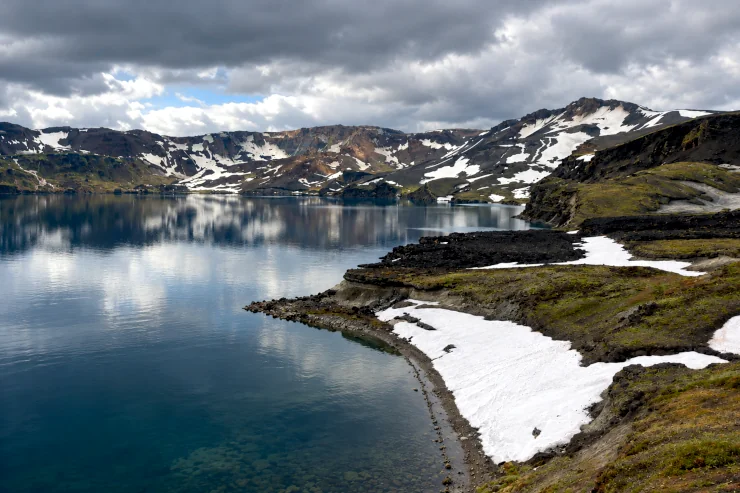
Öskjuvatn is a lake in the Highlands of Iceland, inside the Askja volcano. The name simply means “Askja’s lake.”
It sits far from towns, in a wild and empty area of lava fields called Ódáðahraun. The lake covers about 11 square kilometers and reaches a depth of over 200 meters, making it one of the deepest lakes in the country.
The lake was not always there. In 1875, Askja had a huge eruption. The ground above the magma chamber collapsed and left a large hole, called a caldera.
This is common with big volcanoes: after magma leaves the chamber below, the empty space can’t hold the weight above it, so the surface sinks. Water slowly filled this hole over the following decades. It took more than 30 years for the lake to reach the level we see today.
Right next to Öskjuvatn is a smaller crater called Víti, which formed in the same eruption and now holds warm water good for bathing.
Scientists have measured the lake many times since the 1870s, and the numbers kept changing. Early visitors reported warmer water and a smaller size, because the area was still active and settling after the eruption.
Over the years, the lake grew larger and colder as the volcanic heat faded. The lake floor has also sunk lower over time, which shows that the ground under Askja is still moving.
Öskjuvatn holds a sad story too. In 1907, two German travelers went out on the water in a small boat and never returned. No one found them. People at the time thought a landslide or some shock under the water might have caused it, since strange disturbances were noticed in the area around that time. A small monument stands near the shore in memory of them.
More recently, in July 2014, a large piece of the crater wall broke off and slid into the lake. Around 50 million cubic meters of rock fell in one night. This caused big waves, some as tall as 50 meters, which even reached Víti next door.
Experts believe the rock became unstable after unusually warm weather melted frozen ground that had been holding it in place. Events like this are a reminder that a caldera lake is not a calm, finished landscape; the ground around it keeps shifting long after the original eruption.
Today Öskjuvatn still changes slowly, shaped by heat from below and the freezing and thawing of the rock around it. It remains one of the clearest examples in Iceland of how a volcano’s crater can turn, step by step, into a lake.
This page contains affiliate links, which may earn us a small commission at no extra cost to you.