
 Mio Nishimura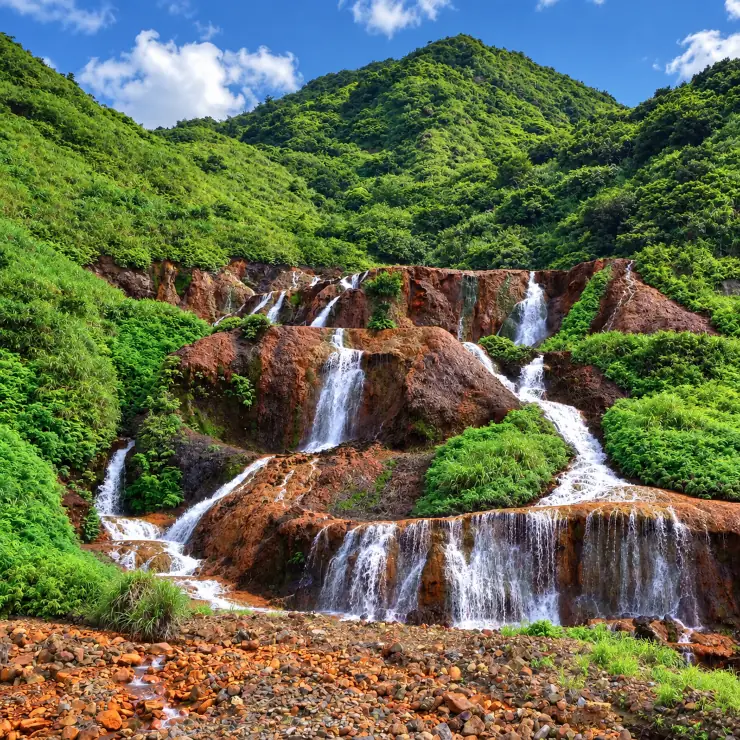
Picture Taiwan from above. Green mountains rise high above the clouds. Thick forests cover the slopes, deep canyons cut through marble cliffs, and hot springs steam in the hills. It looks like the perfect place to escape from the world.
Now walk along the east coast of Taiwan and find old coral reefs far from the water. Coral needs the sea to live, so how did it end up on dry land? The answer is simple and a little shocking: Taiwan is still rising, slowly, right now.
Taiwan is a young island, only a few million years old. It sits where two giant pieces of the Earth’s crust push against each other. One slowly slides under the other, squeezing, folding, and lifting the land above. Over a very long time, this slow push built a wall of steep mountains along the island’s eastern side. You can think of the whole island as one huge block of rock that is tilted, with the high edge in the east and a gentle slope toward the west.
You cannot see this movement in a single day, but you can feel it. Taiwan has thousands of earthquakes every year. Most are so small that nobody notices them, but hundreds are strong enough to make people feel the floor move. For many people there, a shaking cup of tea or a swinging lamp is just part of daily life.
Sometimes, though, the island shows its full power. In 1999, a huge earthquake hit the center of Taiwan, and more than two thousand people lost their lives. Almost two decades later, in 2016, another strong quake shook the south. In the city of Tainan, one tall apartment building collapsed, and its fall caused most of the deaths. People still remember these disasters, which changed the way many think about safe buildings.
A look at the map shows where people live. The mountains in the east are wild, green, and hard to enter, so most people live on the flat plains in the west. Big cities, farms, and factories fill the western third of the island. The shaking does not stay in the mountains, so cities on the plains feel it too.
Yet the same force that shakes the ground also creates the island’s beauty. Many visitors come to Taiwan for its mountains, canyons, and hot springs, and most of them never think about the slow collision happening under their feet.
