
 Islands Around
Medieval architecture in Cyprus was greatly influenced by French Gothic and Italian Renaissance styles. These styles came to the Western Asian island during the era of Latin domination, between the 12th and 16th centuries. This period changed the way Cyprus looked forever. Old churches, castles, and abbeys still show these European styles today.
If you plan a trip to Cyprus, this guide will help you understand what you are looking at.
This page may contain affiliate links.
Why Europe Came to Cyprus
In 1191, King Richard the Lionheart took control of Cyprus during the Third Crusade. He later sold the island to the Knights Templar, and then to Gui de Lusignan, a French noble. The Lusignan family ruled Cyprus for almost 300 years. They brought French customs, French language, and French building styles with them.
Later, the Venetians took over the island in 1489. They stayed until the Ottomans arrived in 1571. Both the French and the Venetians left a strong mark on Cypriot buildings.
French Gothic Churches You Can Still Visit
The Lusignan kings built many churches in the French Gothic style. The most famous is Saint Sophia Cathedral in Nicosia, now known as the Selimiye Mosque. Builders started work on it in 1209, and most of the building was ready by 1228.
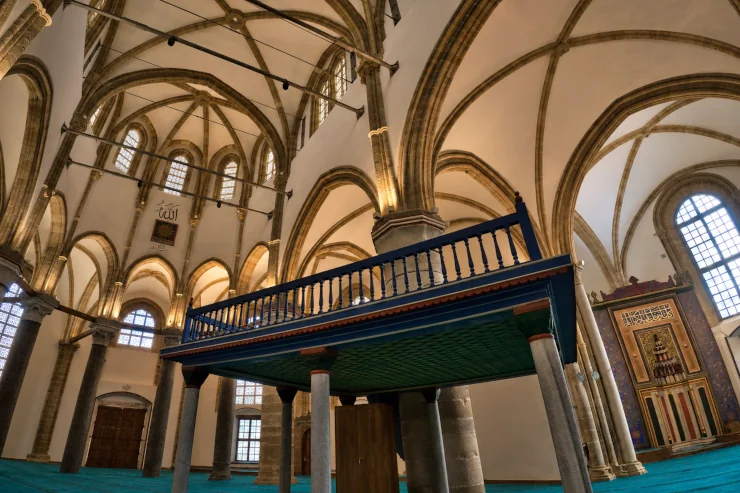
The cathedral has tall pointed arches and thin windows, just like the great cathedrals in France. But there is one big difference. Cypriot Gothic churches often have flat roofs instead of the steep, pointed roofs common in Europe. This is due to the hot local climate and local building materials.
Another top example is Saint Nicholas Cathedral in Famagusta, now known as Lala Mustafa Pasha Mosque. Builders finished it around 1300. It has two towers and three curved sections at the east end, which shows some influence from Orthodox Christian design too.
Bellapais Abbey: A Gothic Treasure Near Kyrenia
Bellapais Abbey stands on a hill near Kyrenia, with wide views over the sea. Augustinian monks started building it around 1198. King Hugh III finished most of the main building between 1267 and 1284. His son, King Hugh IV, added the cloister and the dining hall by 1359. The name “Bellapais” comes from the French words “Abbaye de la Paix”, which mean “Abbey of Peace”.

Walk around the abbey slowly. Look at the carved stone details and the pointed arches in the dining hall. It is one of the best places on the island to see how French building ideas mixed with local skills.
Venetian Walls and Renaissance Style
When the Venetians took over in 1489, they brought a new style: the Italian Renaissance. Instead of tall churches, they focused on strong, practical buildings. Nicosia’s city walls are a perfect example.

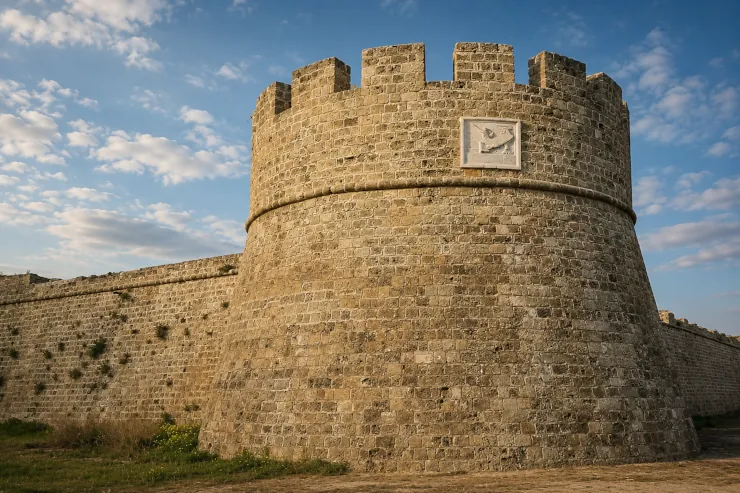
The Venetians built these walls between 1567 and 1570, right before the Ottoman invasion. The walls form a circle around the old city, and the whole layout looks like a star from above, with eleven heart-shaped bastions sticking out. This design was new for its time and made the city harder to attack.
Famagusta also has strong Venetian walls and fortresses. The city was a major port, so the Venetians wanted to protect it well. Walk along these old stone walls today, and you can still see cannon holes and guard towers from that era.
Mixing Old and New in One Building
Many buildings in Cyprus show both styles together, since builders often reused older structures. A Gothic church might have a Renaissance doorway added later, or a Lusignan tower might sit next to Venetian walls.
This mix makes Cypriot architecture unique. It is not pure French Gothic, and it is not pure Italian Renaissance either. It is something new, shaped by local stone, local weather, and local traditions.
Planning Your Cyprus Architecture Trip
Nicosia, Famagusta, and Kyrenia hold most of the best examples. A trip of four or five days is enough to see the main sites, but you may want more time if you like slow, detailed exploring. Comfortable shoes help a lot, since many old streets have uneven stone paths.
Book your trip with these trusted platforms, which can help you handle everything in one place, from flights to unforgettable experiences:
- Expedia — Find the best flight deals
- Direct Ferries — Compare ferry routes easily
- Hotels.com — Book accommodation with flexible options
- Discover Cars — Rent a car at competitive prices
- GetYourGuide — Discover top-rated tours and activities
- Stay22 — Explore stays with an interactive map