
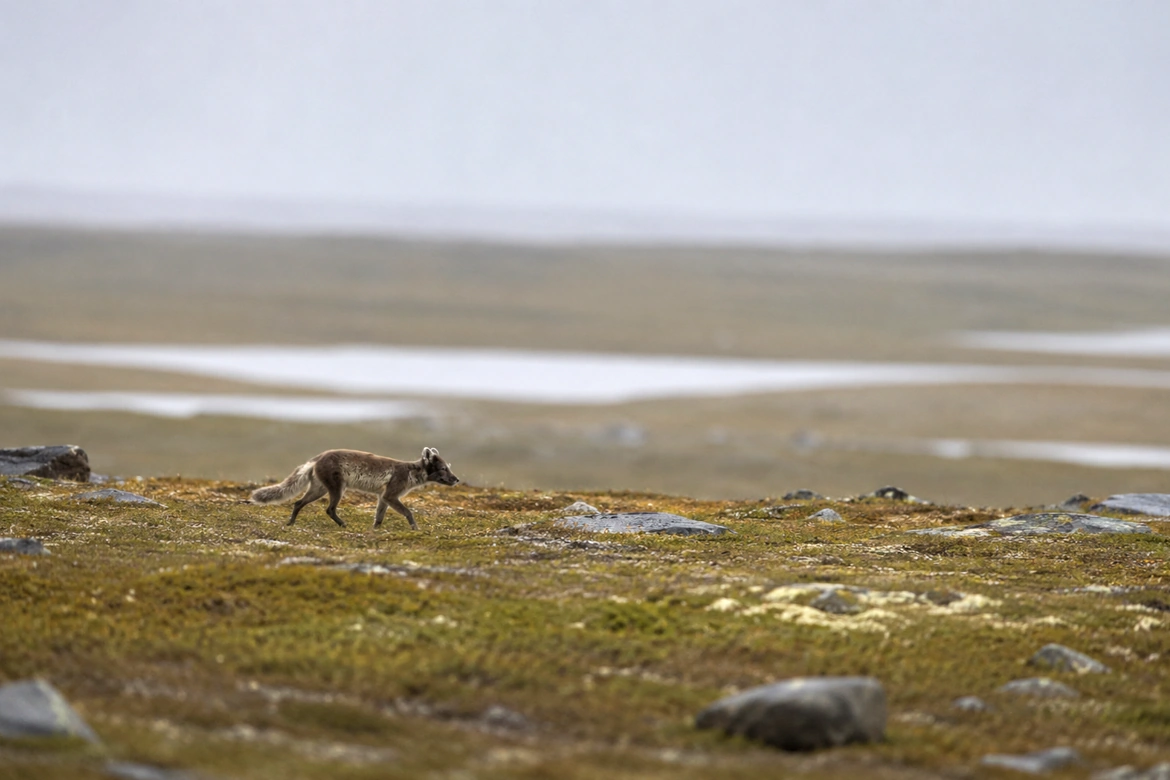
Arctic Foxes in Spitsbergen are one of the most amazing animals you can see on a trip to Svalbard.
This small, tough mammal lives in one of the coldest places on Earth. It survives storms, deep snow, and months of darkness. If you plan a visit, learning about this animal will make your trip more special.
This page may contain affiliate links.
What Makes the Arctic Fox Special
The Arctic fox, also called Vulpes lagopus, is built for cold weather. It has a short nose, small ears, and a compact, stocky body. This shape helps the fox retain heat. Its fur is one of the best natural coats in the animal world.
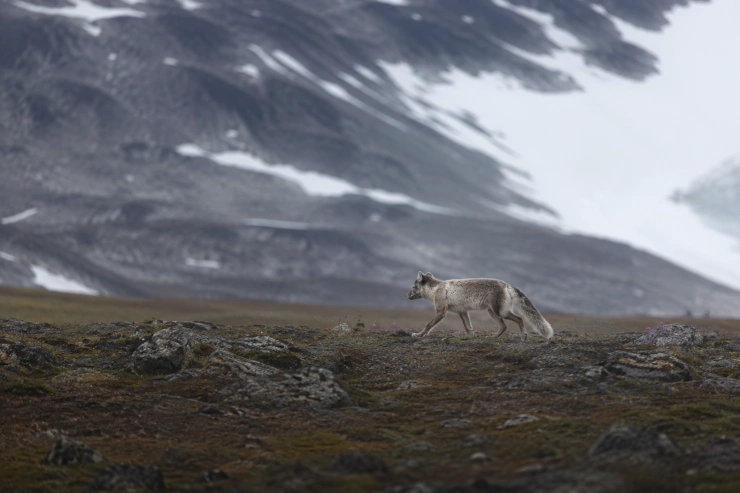
Its fur changes color twice a year through a process called molting. This helps it stay hidden from predators and prey through every season. In winter, the fur turns pure white, so the fox blends in with the snow. In summer, the coat turns brown or gray, matching the rocks and tundra.
Thanks to these strong adaptations, the Arctic fox is not currently in danger. The IUCN Red List of Threatened Species marks it as Least Concern, and experts believe several hundred thousand of these animals live in the wild worldwide today.
This fox is small compared to other fox species. It usually weighs between 3 and 4 kilograms (6 and 9 pounds). Its thick tail helps with balance and also works like a blanket. When the fox sleeps, it wraps its tail around its body and covers its nose and paws for warmth.
The Arctic fox does not conquer the cold; it learns to live within it.
Where Arctic Foxes Live in Svalbard
Arctic foxes live across the whole Svalbard archipelago in Norway. You can find them near the coast, in valleys, and even close to towns like Longyearbyen. They often stay near bird cliffs, since these areas offer plenty of food. Popular wildlife spots such as Bellsund, Hornsund, and areas near Ny Alesund are also good places to look.
Foxes dig dens in soft ground, usually on slopes or hills where the earth is not frozen too deep. Some of these dens have been used by fox families for many generations. A den can have many tunnels and entrances, which helps the foxes escape danger quickly.
What Arctic Foxes Eat
Food is hard to find in the Arctic, so this fox eats almost anything it can catch. Its diet includes birds, eggs, small rodents like lemmings, and even leftover food from polar bear kills. In Svalbard, since there are no lemmings, foxes depend more on bird colonies. Kittiwakes, guillemots, and geese are common prey.
During summer, food is easier to find. Foxes often store extra food in their dens to use later, when winter makes hunting harder. This habit helps them survive the long, dark months when prey is scarce.
How Arctic Foxes Survive the Winter
Winter in Spitsbergen is extreme. Temperatures can drop far below zero, and the sun disappears for months. Arctic foxes handle this through a great adaptation.
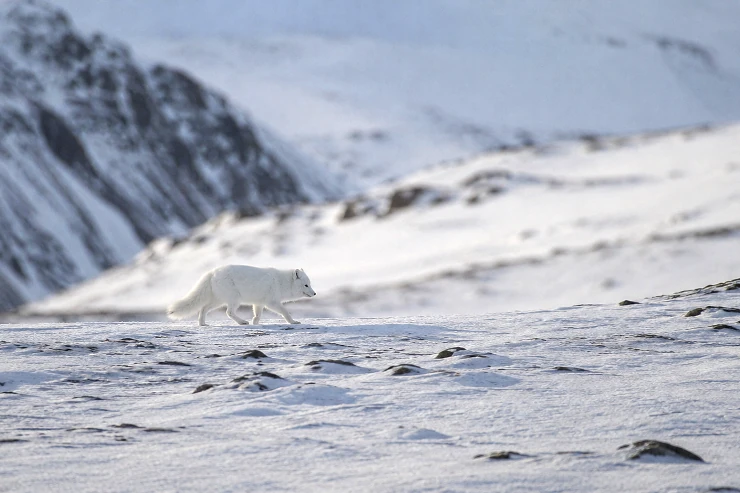
Their fur is one of the warmest of any mammal, and their small ears and short muzzle reduce heat loss. Their paws have fur on the bottom, which works like natural snow boots and protects them from the icy ground.
Best Time to Spot Arctic Foxes
The best months to see Arctic foxes in Spitsbergen are usually from late spring to early fall, especially May through September. During this time, foxes are more active, hunting for food to build up fat before winter. You may also see fox pups near dens in early summer, since this is breeding season.
Winter sightings are possible too, especially near town areas where foxes sometimes search for scraps. However, the long polar night makes spotting them harder.
Tips for Watching Arctic Foxes Safely
Wildlife watching in Svalbard comes with rules to protect both animals and people. Here are some simple tips.
The answer should always be the same: stay well back and let the fox decide how close it wants to be. Do not chase a fox, surround it, feed it, or try to attract it with food.
Use binoculars or a zoom lens instead of walking closer, so the fox can act naturally without stress. Move slowly and quietly if you spot a fox den, and avoid staying too long near it, especially if pups are present.
A fox that approaches people should not be treated like a domestic animal. Even if it looks calm or friendly, it is still wild. Wild animals can carry diseases, and touching them creates unnecessary risks for both people and wildlife.
Spitsbergen has a history of rabies in wild animals. A rabies-infected Arctic fox was confirmed in Pyramiden in May 2025. The Governor of Svalbard advised people to avoid close contact with animals showing unusual behavior and to report sick or dead animals.
In August 2025, highly pathogenic avian influenza was also detected in four Arctic fox pups near Barentsburg. The foxes tested negative for rabies, but the case shows why visitors should never handle sick or dead wildlife.
Always travel with a licensed guide outside of town, since polar bears are also present in the same areas and can be dangerous.
Interesting Facts About Arctic Foxes
Arctic foxes are one of the few mammals that can survive year-round this far north. Their body can handle temperatures as low as minus 55 degrees Celsius (70 degrees Fahrenheit) without shivering. Unlike red foxes, which sometimes compete with them for territory, Arctic foxes are smaller but better suited to extreme cold.
Another interesting fact is that Arctic fox populations rise and fall with the number of birds nesting nearby. When bird colonies grow, fox numbers often grow too, since there is more food available.
Some foxes travel long distances during winter to find food. Scientists have tracked Arctic foxes moving across sea ice from Svalbard to Greenland or Canada, covering thousands of miles in search of food sources.
Where to Learn More During Your Trip
Many wildlife tours in Longyearbyen include information about Arctic fox behavior and habitat. Local guides often know where recent fox activity has been seen.
The Svalbard Museum also offers exhibits about the island’s wildlife, including detailed information on the Arctic fox and its role in the ecosystem.
Watching an Arctic fox move across the snow or along a rocky coastline is a memorable part of any Spitsbergen adventure. With patience and the right timing, you have a good chance to see this incredible animal in its natural home.
Book Flights, Hotels, Cars, and Activities
These trusted travel platforms can help you arrange different parts of your Spitsbergen trip:
- Expedia — Find flights, hotels, car rentals, packages, and activities in one place.
- Hotels.com — Book accommodation and compare hotel options. Many properties offer flexible or refundable rates, depending on the booking.
- Discover Cars — Compare car rental offers from different rental companies. Roads in Spitsbergen are limited to the area around Longyearbyen and do not reach the wider wilderness.
- GetYourGuide — Find tours and activities and check reviews from other travelers.
- Stay22 — Use an interactive map to explore places to stay and see accommodation options by location.