
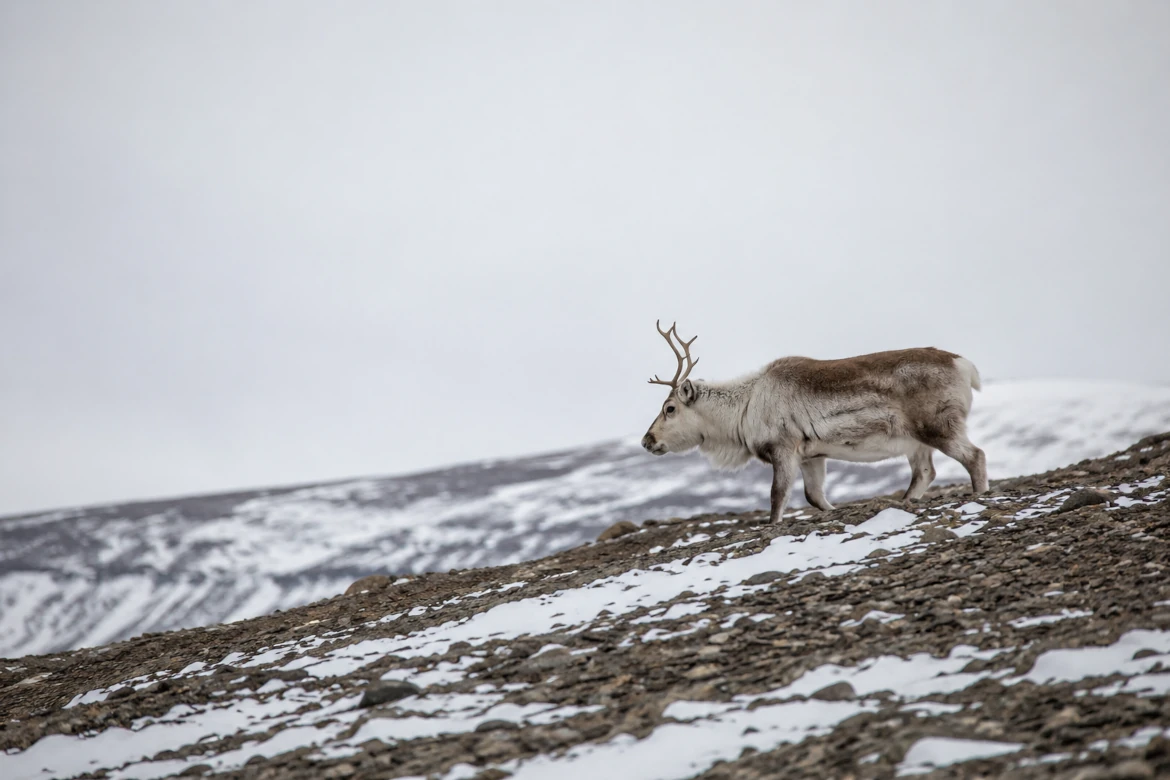
Reindeer in Spitsbergen look nothing like the animals most people picture pulling sleighs in holiday stories.
They are called Svalbard reindeer, and their scientific name is Rangifer tarandus platyrhynchus. They are one of the smallest subspecies of reindeer in the world, and you can only find them on the Svalbard islands in Norway. Seeing reindeer in Spitsbergen is a special part of any Arctic trip.
Svalbard reindeer are smaller and stockier than the reindeer you find in Scandinavia or North America. On average, males weigh about 80 kilograms and are around 160 centimeters long, while females weigh about 60 kilograms and are around 150 centimeters long.
Their weight actually shifts a lot with the seasons, dropping in spring and building back up by autumn to prepare for winter. Their legs are shorter, and their heads are rounder than those of other reindeer. These features help them survive the harsh Arctic winter.
This page may contain affiliate links.
A Long History on a Remote Island
The way reindeer in Spitsbergen look is not random. A 2023 study published in the journal iScience found that Svalbard reindeer colonized the archipelago around 6,000 to 8,000 years ago. Genetic research suggests that the first animals most likely came from Russia via Novaya Zemlya and the Franz Josef Land islands.
This means the population likely started from just a small number of animals. Such a small founding group can lead to inbreeding and low genetic diversity. Svalbard reindeer are now known to be the most inbred reindeer subspecies studied, with the lowest genetic diversity of any northern reindeer population, yet they have survived and adapted to life in the High Arctic.
Because they have lived alone on these islands for so long, reindeer in Spitsbergen also act differently from other reindeer. They usually live in small groups of only three to five animals, not large herds. Sometimes the groups get bigger. This happens in autumn, when males gather groups of females to mate with. It also happens in hard winters, when many reindeer need to feed in the same small area.
The Svalbard reindeer teaches us to stay strong and keep going, even in the coldest and hardest times.
What Do Reindeer in Spitsbergen Eat
Finding enough food is one of the biggest problems these animals face. They eat many kinds of plants, including grasses, mosses, sedges, and shrubs. In the short summer, reindeer eat as much as they can. This helps them build up fat that they need to survive the long, dark winter.
In winter, food becomes hard to find. Reindeer eat whatever plants they can reach under or above the thin snow. They often move to windy ridges, mountain slopes, and flat areas called plateaus. Snow builds up less in these places, so it is easier to find food there. This is why these spots are often the best places to look for reindeer in winter.
Winter weather can also be dangerous. Sometimes rain falls on the snow and then freezes. This creates a thick layer of ice on the ground. When this happens, reindeer cannot reach the plants underneath. This kind of ice can cause serious mortality in bad winters because it prevents reindeer from reaching food.
A History of Hunting and Protection
Between 1860 and 1925, people hunted reindeer in Spitsbergen heavily. This hunting caused a big drop in their numbers. In 1925, hunting was banned. Only scientists were allowed to catch a small number for research. This protection lasted until 1983. After that, reindeer slowly moved back into areas where they had disappeared.
Today, no one knows the exact number of reindeer living on Svalbard. There has not been a full count of the whole area in recent years. However, scientists who study certain regions, like Nordenskiöld Land, Edgeøya, and Barentsøya, say reindeer numbers have grown in recent decades.
These three areas have some of the highest densities of reindeer on Svalbard. Researchers keep studying how winter weather, including the dangerous ice mentioned above, affects how many reindeer survive each year.
Where and When to See Reindeer in Spitsbergen
One of the best things about reindeer in Spitsbergen is how easy they are to find. You can often see them in and around Longyearbyen, the main town. They sometimes graze calmly near houses or along the edges of town. Many wildlife tours also include stops to see reindeer.
Summer is a great time to see them. Reindeer are very active and eat a lot during this season. Baby reindeer, called calves, are usually born in late June. By July, male reindeer often have large antlers. But summer is not the only good time. Guided wildlife trips run from October through March too, so you have a good chance of seeing reindeer in winter as well.
Can You See Svalbard Reindeer Without a Tour?
Yes, you can. This is one of the easiest parts of visiting Svalbard. Many visitors see reindeer just by walking around Longyearbyen. You do not need to book a tour to spot one. Reindeer often graze near houses, along paths, or on the hills just outside town.
However, there is an important safety rule to remember. Inside Longyearbyen, the field safety requirements for travel outside settlements do not apply. But if you travel outside the town, you must have suitable means of deterring polar bears and follow the current safety rules.
If you join an organized tour, the tour operator is responsible for meeting the relevant safety requirements. If you plan to travel on your own, check the latest rules from the Governor of Svalbard before you leave town.
Respecting Svalbard’s Wildlife
Reindeer in Spitsbergen often seem calm around people. But they are still wild animals. Visitors should keep a safe distance from them. Do not feed them, and do not get too close just to take a photo. This keeps both you and the reindeer safe. Local rules in Longyearbyen ask visitors to watch reindeer quietly from a distance, without disturbing them.
If you find antlers on the ground during a hike, remember that the rules are different for shed antlers than for the remains of a dead animal. Before you take any animal remains home, check the current rules with the Governor of Svalbard. Different types of remains and different locations can have different protections.
Book Flights, Hotels, Cars, and Activities
These trusted travel platforms can help you arrange different parts of your Spitsbergen trip:
- Expedia — Find flights, hotels, car rentals, packages, and activities in one place.
- Hotels.com — Book accommodation and compare hotel options. Many properties offer flexible or refundable rates, depending on the booking.
- Discover Cars — Compare car rental offers from different rental companies. Roads in Spitsbergen are limited to the area around Longyearbyen and do not reach the wider wilderness.
- GetYourGuide — Find tours and activities and check reviews from other travelers.
- Stay22 — Use an interactive map to explore places to stay and see accommodation options by location.