
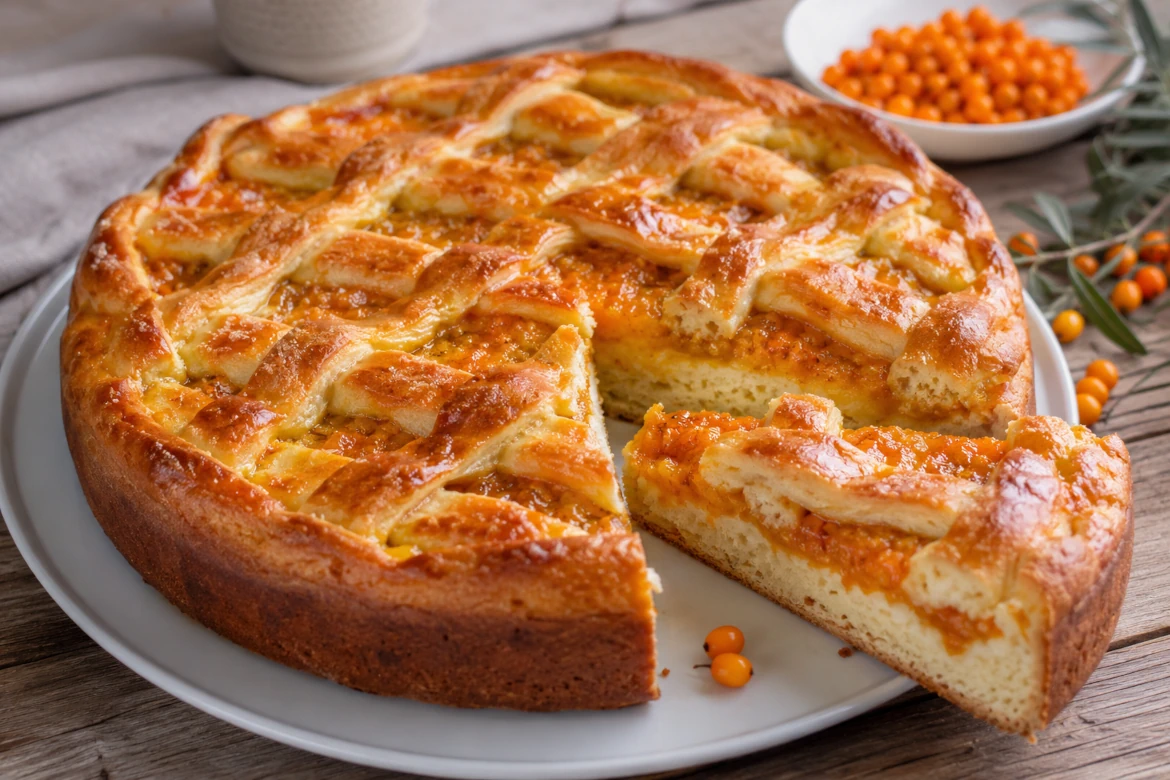
Sea buckthorn is a bright orange berry with a sharp, refreshing taste and citrus-like notes. On Rügen, an island in northern Germany, the hardy plant grows along the dunes and sandy coast. Local bakeries and cafés use the berries in cakes, jams, drinks, and desserts. Sea buckthorn is one of the island’s signature flavors.
This yeast cake is inspired by the baking traditions of Rügen. The soft, buttery dough is gently sweet, so it balances the sourness of the berries. It is a delicious dessert for autumn and winter.
Start with the dough. Mix 500 grams of all-purpose flour, 250 milliliters of lukewarm whole milk (35 to 38°C), 7 grams of instant yeast, 90 grams of sugar, two eggs, 80 grams of melted and cooled butter, 5 grams of salt, a teaspoon of vanilla, and the zest of one lemon. Knead by hand for 8 to 10 minutes, or in a stand mixer for 6 to 8 minutes. The dough should be smooth, elastic, and soft. It can stay a little tacky, but it should not be wet. Avoid adding much extra flour, because it can make the cake dense. Let the dough rise in a warm, draft-free place for 60 to 90 minutes, or until doubled in size.
While you wait, make the filling. Cook 300 grams of berries with 50 milliliters of water over medium-low heat for five to seven minutes, until they release their juice. If using frozen berries, add them directly to the pan without thawing and cook for a few extra minutes, until the berries soften. Press the mixture through a fine-mesh sieve, using a spoon to extract as much puree as possible. Discard the seeds and skins. Return the puree to the pan and add 175 grams of sugar and a pinch of salt.
The berries vary in acidity, so if the filling still tastes too sharp, add 10 to 25 grams more sugar. Bring it to a gentle simmer and stir in 15 grams of cornstarch mixed with 30 milliliters of cold water. Cook for one or two minutes, stirring constantly, until the filling is thick and glossy. Let it cool completely, because a hot filling can disturb the yeast dough. The cooled filling should look like a thick fruit spread. If the filling is still too runny, return it to the pan, add a little more cornstarch slurry, and cook briefly until thickened.
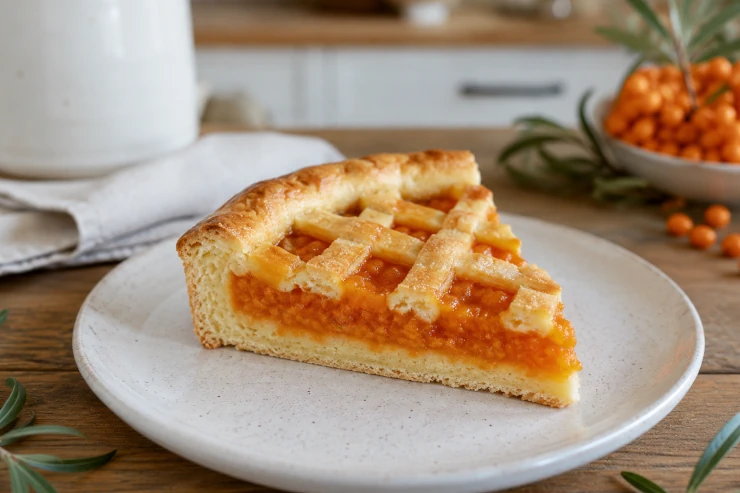
Gently deflate the risen dough and divide it into two portions. Use about two-thirds for the base and one-third for the top. Roll out the larger piece into a circle slightly bigger than a greased 26-centimeter round cake pan. Press it into the bottom and about 2 centimeters up the sides. Spread the cool filling over it, leaving a small border at the edge. Roll out the rest of the dough and cut strips 1.5 to 2 centimeters wide. Lay them diagonally over the filling to make a lattice. You can also cover the cake with a thin circle of dough and press the edges to seal it.
Cover the cake loosely and let it rise for 25 to 35 minutes. It should look slightly puffed, but it does not need to double. Meanwhile, heat the oven to 180°C, or 160°C with a fan. Brush the dough with one egg yolk mixed with a tablespoon of milk, and sprinkle on a little sugar if you like. Bake on the middle rack for 35 to 45 minutes, until deep golden brown. If the top browns too fast, cover it loosely with foil for the last 10 to 15 minutes.
Leave the cake in the pan for 10 to 15 minutes, then move it to a wire rack. Wait at least 30 to 45 minutes before slicing, because the filling keeps setting as it cools. Serve it slightly warm or at room temperature with coffee or tea. Lightly sweetened whipped cream, vanilla cream, or vanilla ice cream softens the sharp berry flavor. The cake keeps for up to two days at room temperature if covered, or up to four days in the refrigerator. Allow refrigerated slices to come to room temperature before serving.