
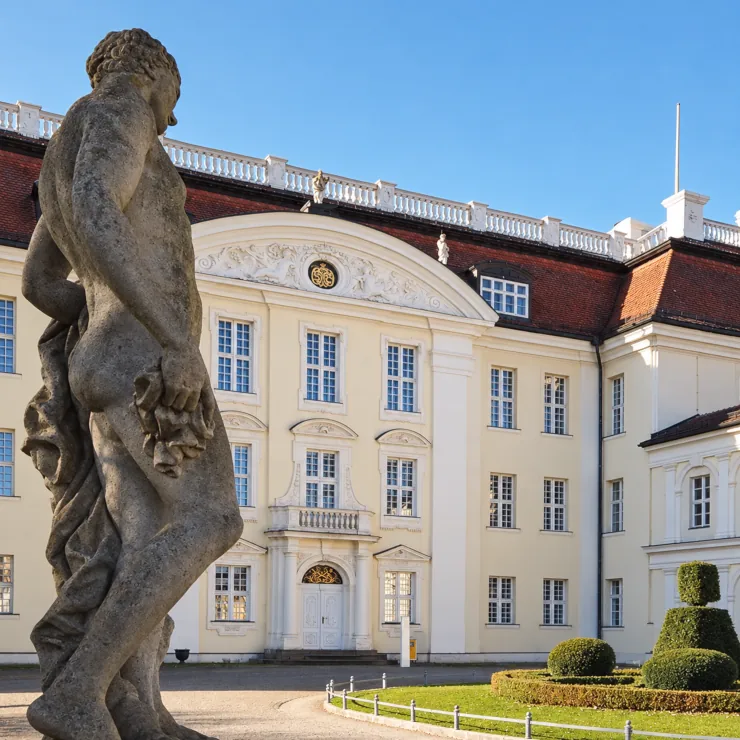
In the southeast of Berlin, the Dahme River meets the Spree in the district of Köpenick. Between the waters lies a small island dominated by a grand palace. Köpenick Palace stands on the Schlossinsel, or Palace Island, and its pale walls and red roof are reflected in the river. A short bridge leads to the island.
The palace in its present form was built in the second half of the 17th century for Prince Frederick, who later became the first king in Prussia. The Dutch architect Rutger van Langervelt designed it in the Dutch Baroque style, with three floors and a French mansard roof. Before that, the island held a hunting lodge and, long ago, a Slavic fortress.
The palace is linked to a dramatic event. In 1730, the young Crown Prince Frederick, who would later be known as Frederick the Great, tried to escape from his strict father. His friend Hans Hermann von Katte tried to help him. The king’s officers caught them, and a military court met in Köpenick Palace and tried both of them. Katte was put to death, and the king spared his son. The story became one of the best-known tales of Prussian history.
Today the palace houses a branch of the Museum of Decorative Arts, which opened here in 2004. Its rooms show furniture, mirrors, and silver from the Renaissance, Baroque, and Rococo periods. The Hall of Arms, with its richly decorated ceiling, is a highlight, and the palace chapel has a fine Baroque interior. The rooms look out over the river, with boats passing along the tree-lined banks.
Outside, the garden is a quiet place for walks, with old trees shading the lawns and paths that follow the water. In summer, concerts take place in the courtyard.
Just across the river, Köpenick’s historic center invites visitors to explore its narrow streets and cafés.
The town is also known for the story of the Captain of Köpenick. In 1906, a shoemaker named Wilhelm Voigt became famous after donning a Prussian army captain’s uniform, taking control of the town hall and seizing the town’s cash box. The incident later inspired a famous play by Carl Zuckmayer.