
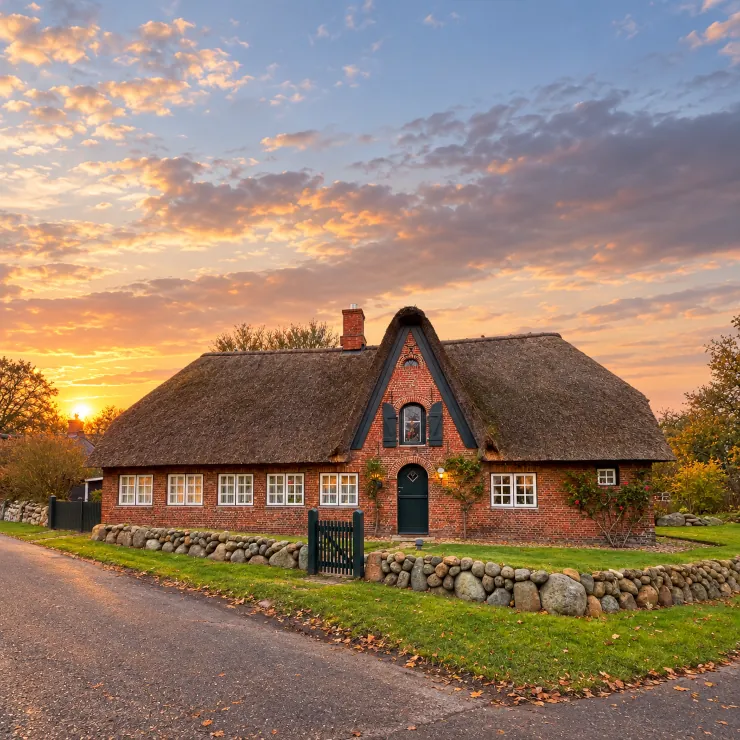
On the east side of Sylt, Germany’s northernmost island, the village of Keitum faces the Wadden Sea. It looks like a picture of old Frisian life. Narrow lanes run between thatched houses, low walls of piled stones surround the gardens, and the air smells of salt and grass. Keitum had been settled for centuries before the island’s beach resorts appeared.
The wealth of Keitum came from the sea. In the 1600s and 1700s, islanders worked as sailors and captains on whaling and trading ships, and many of them built solid houses in the village with the money they earned. These captains’ houses still line the streets. Some islanders still speak Söl’ring, the Frisian dialect of Sylt.
The Old Frisian House, a captain’s home renovated in 1739, is now a museum. Inside, Dutch tiles, old furniture, built-in alcove beds, and a kitchen with its stove show how a seafaring family lived. A hidden staircase leads to a small room with a view of the Wadden Sea.
St. Severin Church stands on a small hill at the edge of the village. Built in the Romanesque style more than 800 years ago, its tower once guided sailors and is still easy to spot across the flat land. In the churchyard, old gravestones mark the graves of sea captains and their families.
In the 1800s, the beach resort of Westerland grew on the west coast, while Keitum stayed small and unhurried. Today the village is known for galleries, cafés, and gardens. Cyclists can follow paths from Keitum along the east coast to the Wadden Sea shore and to the Morsum Cliff.
At low tide, the sea draws back from the shore, and guided tours walk across the mudflats to see worms, shells, and birds. The mudflats belong to the Wadden Sea National Park and to the UNESCO World Heritage site that covers this coast.