
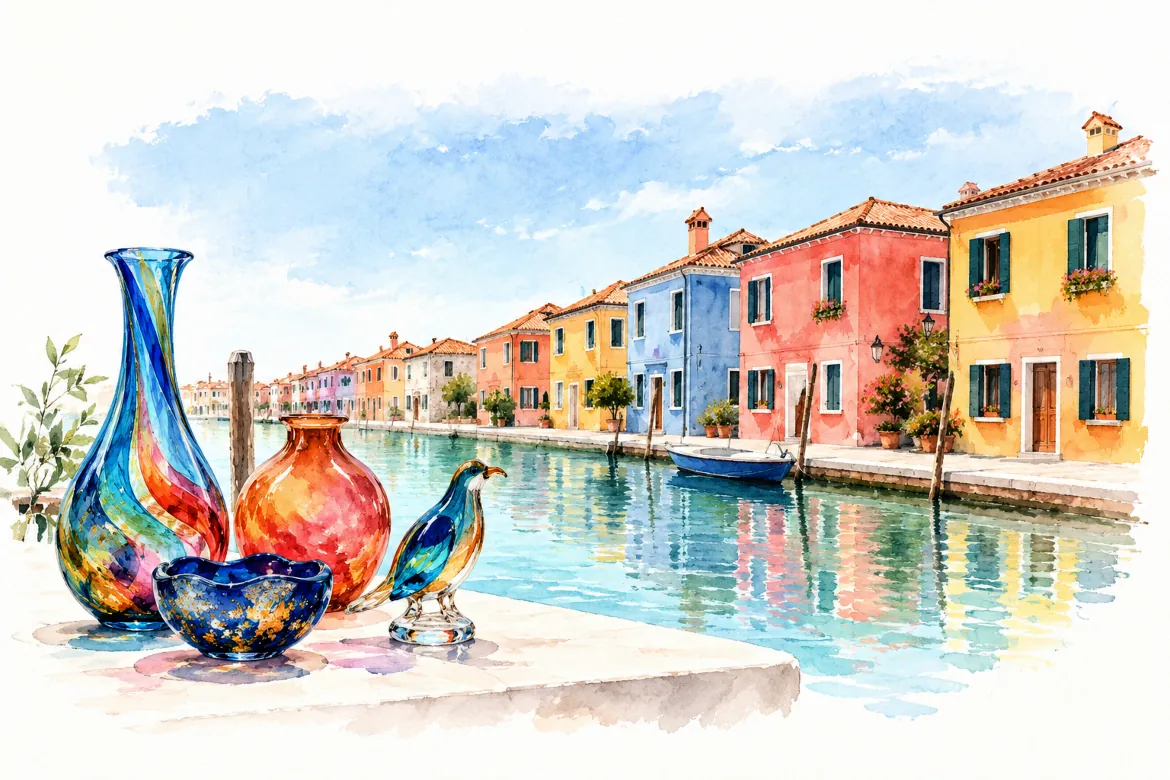
 Islands Around
In the 13th century, Venice ordered its glass furnaces out of the city and onto the island of Murano. The reason was simple. Most Venetian buildings had wooden frames, and the furnaces burned at very high temperatures day and night. One bad fire could destroy a whole district. So Venice chose a stretch of water between itself and the furnaces.
More than 700 years later, the furnaces still burn.
This page may contain affiliate links.
Getting to Murano
We understand that exploring new places can be both exciting and daunting. Just a short 30-minute ferry crossing from San Marco or Burano will take you to the enchanting island of Murano, where you can take time to appreciate its unique charm and artistry.
Exploring Murano
Murano is not a single island but a group of small islets. Bridges link them, and a canal runs through the middle. Because Murano is small, you can easily explore it on foot. For example, wander along the canal, cross a few bridges and peek into the workshop windows.
Watch a glassblower at work
This is the highlight of any visit. Many workshops offer live demonstrations. There, you can stand a few steps from the furnace and feel the heat. Within minutes, a glowing drop of glass becomes a vase, an animal or a delicate goblet. The tools have barely changed over the centuries. Some workshops charge a fee, while others offer free demos, so ask when you arrive or check ahead.
Masters, privileges and secrets
Venice respected its glassmakers. Some rose to high social status, and their families could even marry into noble houses. In return, the Republic guarded its trade secrets closely. It also strongly restricted glassmakers from leaving the lagoon to work for foreign rulers. Masters taught their apprentices inside the workshop, and that tradition continues today.
Types of Murano glass to look for
In the mid-15th century, Angelo Barovier, from a famous glassmaking family, created cristallo. This very clear glass made fine drinking glasses and mirrors possible. As you browse the shops and the museum, look out for:
- Millefiori: glass with tiny flower-like patterns inside.
- Lattimo: milky white glass that looks like porcelain.
- Chandeliers: large, showy pieces with coloured glass flowers and leaves.
Don’t miss on Murano
- Glass Museum (Museo del Vetro): The Palazzo Giustinian houses the museum, which follows the story of glass from ancient times to today. Visit it first, because you will then know what the best pieces look like before you shop. Check opening hours and ticket prices before your visit.
- Church of Santi Maria e Donato: This is one of the oldest churches in the lagoon. Its 12th-century mosaic floor shows birds and animals, so look down as you walk in.
How to buy real Murano glass
Many shops sell glass, but not every piece comes from the island. Therefore, shop with care:
- Look for the Vetro Artistico Murano trademark. It shows that makers used traditional methods on Murano.
- Ask the seller directly whether the piece was made on the island.
- Be cautious about very cheap souvenirs, because factories elsewhere often mass-produce them.
- Buy straight from a workshop where you have just watched the glassblowers. This is often the safest way to be sure.