
 Islands Around
A Grand Canal boat ride takes you along the main water road of Venice. The canal follows a natural channel and curves through the city in a reverse S. Palaces and churches in Romanesque, Gothic and Renaissance styles line its banks.
Public water buses, called vaporetti, have sailed there since 1881. The gondoliers protested when the first one, the Regina Margherita, appeared.
This page may contain affiliate links.
Main ways to take a Grand Canal boat ride
Several kinds of boats share the canal, so you can choose how to travel. First, the vaporetto is the public water bus. Second, a gondolier rows you along the canal in a gondola. Third, a water taxi is a private motorboat, and it can take you straight to your destination.
Finally, the traghetto is a gondola ferry. It crosses the canal where no bridge is nearby, and passengers usually stand during the short trip. Other boats work on the canal too. For example, barges deliver goods across the city, and police, fire and ambulance boats also use it.
Four pedestrian bridges over the canal
In 1591, builders finished the stone Rialto Bridge, which Antonio da Ponte designed. For a long time, it was the only bridge across the Grand Canal. In the mid-19th century, two iron bridges followed: the first Accademia Bridge and the first Scalzi Bridge. In the 1930s, builders replaced both.
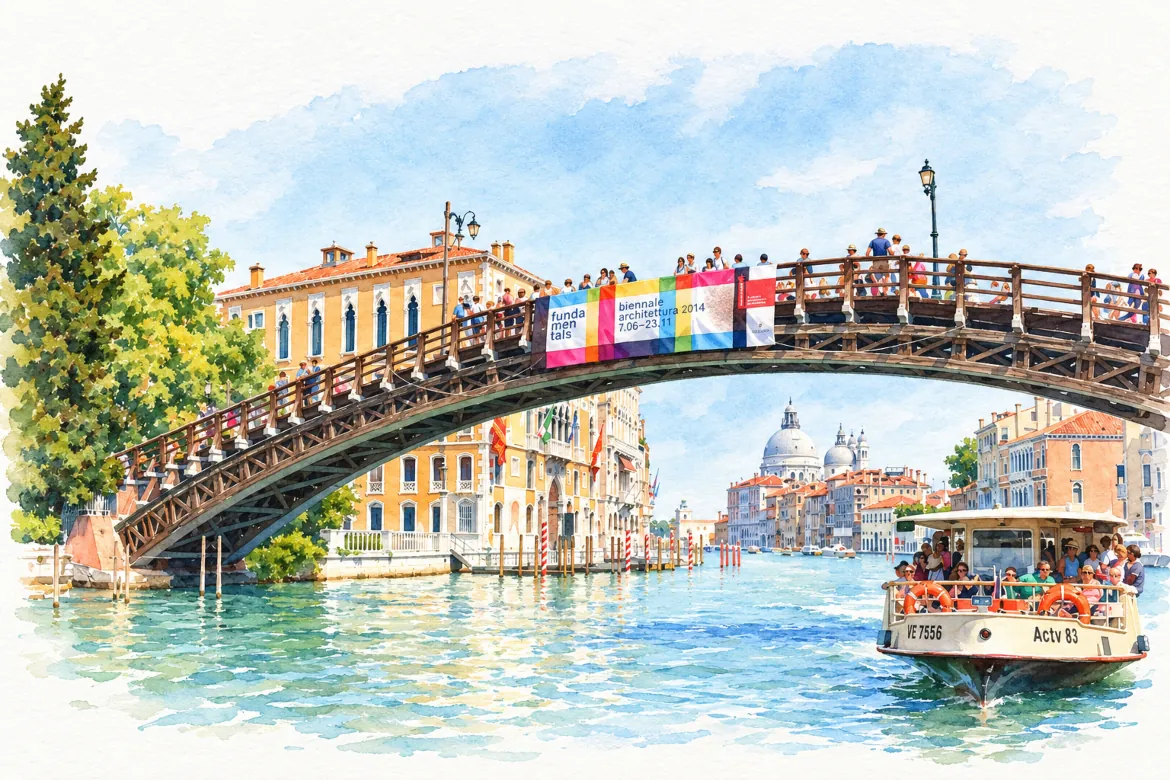
The new Scalzi Bridge is made of stone and stands next to the railway station. The Accademia Bridge, made of wood, leads to the art galleries of the same name. Then, in 2008, the Constitution Bridge opened, and the Spanish architect Santiago Calatrava designed it. Four bridges now cross the canal.
Palaces with long histories
Ca’ d’Oro is a Gothic palace from the 15th century. Its name means “House of Gold”, because gold leaf once decorated its façade. The gold has faded, but the marble front still shines in the sun. Doge Francesco Foscari commissioned Ca’ Foscari, another Gothic palace, and builders finished it in the 1450s. It now serves as the main seat of Ca’ Foscari University.
In contrast, Ca’ Rezzonico took much longer to build. Baldassare Longhena began it in the 17th century for the Bon family, but money problems left it unfinished. Later, the Rezzonico family bought the building, and the architect Giorgio Massari completed it. It now houses a museum of 18th-century Venice.
Santa Maria della Salute at the end of your Grand Canal boat ride
Santa Maria della Salute stands at the entrance of the Grand Canal. A large white dome crowns this Baroque church. In 1630, a plague epidemic struck Venice. The Senate promised to build a church if the city survived. The epidemic ended in 1631, and Venice kept its promise. Longhena designed the church, and work began that year. Builders finished it in 1687, five years after Longhena’s death.
Every year on 21 November, Venetians celebrate the Festa della Madonna della Salute. For this festival, workers build a votive pontoon bridge across the Grand Canal, from Santa Maria del Giglio to the Salute. Pilgrims cross it and light candles inside.