
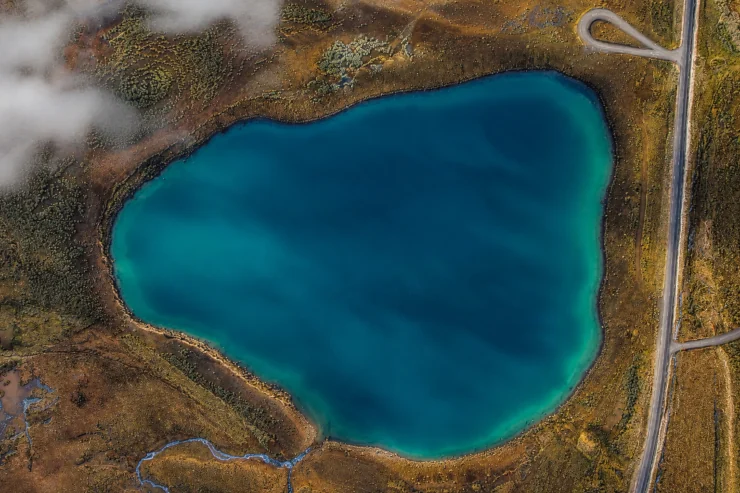
Grænavatn sits on the Reykjanes Peninsula, close to the Krýsuvík geothermal area, not far from the larger lake Kleifarvatn and the rock formation Brimketill.
The name means “Green Lake,” and it fits perfectly. The water has a strong green color, somewhere between seafoam and jade, and it gets more intense the closer you look toward the center.
This color comes from sulfur compounds in the water. Grænavatn formed inside a crater, and it belongs to a type of volcano called a maar, which forms when hot magma meets underground water and causes an explosion.
This kind of eruption blasts out a round hole without building a tall mountain, which is why the lake sits low, framed by dark volcanic ground rather than steep peaks.
The lake is small, only a few hundred meters wide, but it goes down 45 meters, which is surprisingly deep for its size.
It formed after the last Ice Age, and geologists have found something unusual linked to this eruption: lava balls containing a rock called gabbro at their core. This rock type has not been found anywhere else in southwest Iceland, which makes Grænavatn interesting not just for its color but for what lies beneath it.
Grænavatn sits directly next to the main road through Krýsuvík, so it is easy to reach without a long detour.
Its location, close to the capital and along a route many visitors already take to see the geothermal area at Seltún and the black lake Kleifarvatn, means it works best as a short stop rather than a full destination on its own.
A few minutes here are usually enough to take in the color and understand why this stretch of Reykjanes looks and feels so volcanic.
Because Reykjanes is an active volcanic zone, conditions can shift with weather, wind, and even ground activity nearby. It is worth checking road and safety information before visiting, especially in poor weather or if there has been recent seismic activity in the area.
The best way to experience Grænavatn is alongside the bigger sights nearby. Kleifarvatn offers a much larger, darker body of water for contrast, while Seltún nearby shows the more active geothermal side of the region, with steam and bubbling mud.
Grænavatn adds a different kind of image to that sequence, a still, brightly colored crater lake shaped by explosion and mineral chemistry rather than ongoing heat at the surface.
It remains one of the more unusual small lakes in Iceland, not because of its size, but because such a strong, unnatural-looking green color occurs completely naturally, shaped by geology working quietly beneath the surface for thousands of years.
This page contains affiliate links, which may earn us a small commission at no extra cost to you.