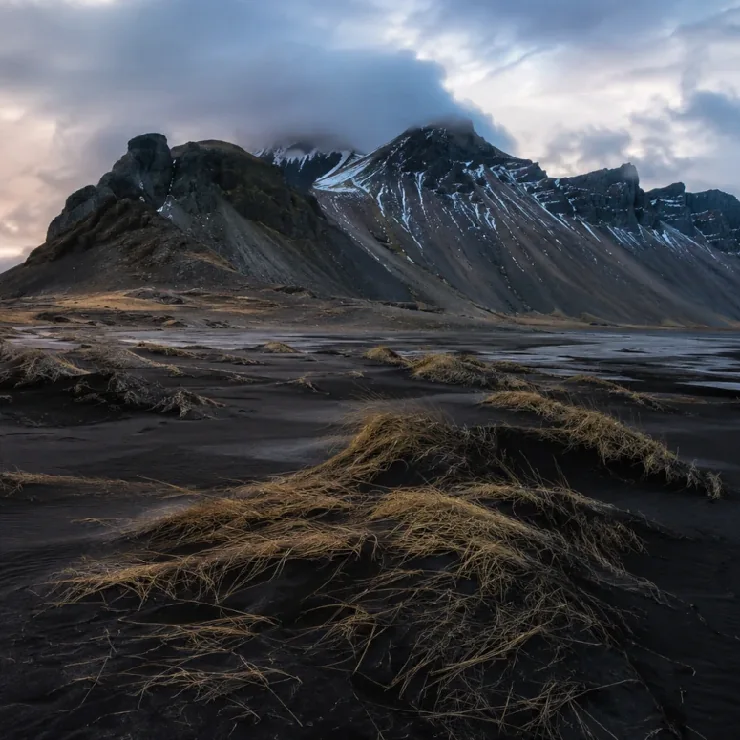
The island of Iceland is young compared to most places on Earth, but it is not a baby. You could think of it as a teenager among very old continents: old enough to have deep roots, but young enough to still have volcanic tantrums.
Iceland sits on the Mid-Atlantic Ridge, where the North American and Eurasian plates are slowly moving apart. This has been happening for about 60 million years, and it created the undersea volcanoes that later became Iceland.
However, the island itself did not rise above the ocean until much later. The oldest rocks you can see in Iceland today are about 16 million years old. Everything else is younger, and some of it is very young.
If you want to stand on the oldest ground in Iceland, go to the Westfjords in the northwest or the Eastfjords in the east. These areas have the oldest bedrock on the island, and some patches are closer to ten million years old.
Geologists call this the mid-Miocene period. These rocks formed long before humans appeared, and even before many of the animals we know today. Still, they are young compared to continents like Africa or North America, where stones that are a billion years old are common.
You might ask why there is no older rock on the surface. The answer is that Iceland never stays still. Volcanoes keep erupting, glaciers keep grinding the land, and the crust keeps changing.
Older rocks have been buried under new lava, worn away by ice, or pushed under the sea. What we see today is mostly the newest part of the story, while the oldest chapters are hidden or gone.
At the other end of the scale, large parts of Iceland are very new. Many lava fields are less than 1,000 years old, formed after the Viking Age and after Iceland adopted Christianity in the year 1000.
In the highlands and near active volcanoes, you can walk on rock that is only a few centuries or even a few decades old. The lava field from the 2014–2015 Holuhraun eruption is younger than many of the people who read about it.
Scientists do not simply guess these ages. They study how rock layers are stacked, look for fossils in old sediments, and use radioactive dating. By measuring how certain elements decay inside minerals, they can calculate when a lava flow cooled and hardened.
For more than a hundred years, researchers argued about Iceland’s age, and some suggested much older dates because of plant fossils. In the late 1960s, better dating methods made the picture clearer, and the mid-Miocene age for the oldest surface rocks has held up well ever since.