
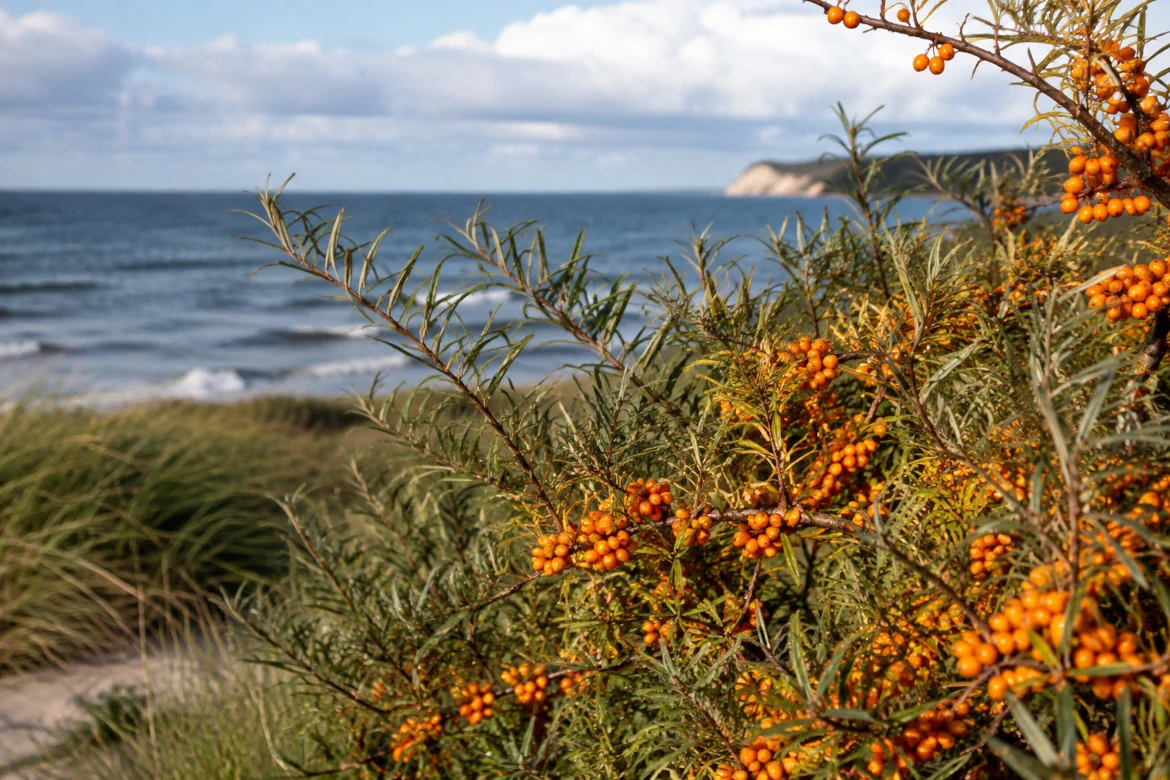
The first thing you notice is the colour.
Not the Baltic Sea. Not the white chalk cliffs that almost every traveler wants to see when visiting Rügen, Germany’s largest island. Not the old seaside villas with their wooden balconies and peeling shutters. It is the orange.
Along a sandy track near the northern coast of Rügen, sea buckthorn berries hang from thorny branches like small lanterns caught in the grey light of an autumn afternoon. A woman in a wool hat stops beside the bushes, pulls on a pair of gloves, and reaches carefully between the leaves. “We have to respect the plant,” she says, showing the scratches on her fingers. “It does not give its fruit away easily.”
The berries are bright, but the landscape around them is quiet. Wind moves through the grass. The sea makes its steady, distant sound beyond the dunes. The plant seems almost out of place, a burst of Mediterranean colour on a northern island where clouds often arrive before the sun.
This page may contain affiliate links.
The Orange Fruit That Belongs to Rügen’s Coastline
Sea buckthorn has become one of Rügen’s defining flavours, but it did not arrive as a decorative addition to the island’s scenery. The plant thrives here because it likes hardship. It grows where many other plants struggle: sandy ground, salty air, exposed coastal stretches.
Its roots hold loose soil together. Its narrow silver-green leaves resist the wind. Its branches carry sharp thorns that make harvesting a slow negotiation rather than a simple picking exercise.
On Rügen, the plant appears along paths between dunes, beside fields, and near stretches of coast where the weather shapes everything. It looks less like a cultivated crop than a companion to the island’s rougher edges.
By September, the berries begin to turn deep orange. They stay on the branches long after other summer fruits have disappeared. Birds take some. People take the rest.
A Harvest That Requires Patience
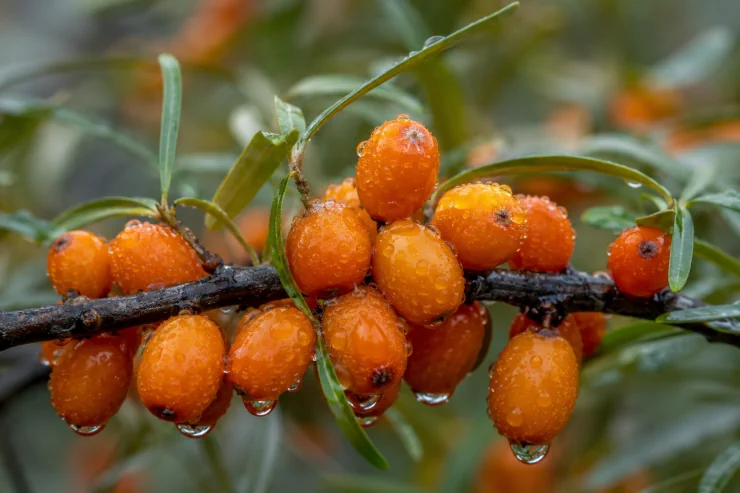
At a small processing workshop on the island, the morning begins with crates of frozen sea buckthorn berries. Freezing is not an accident; it is part of the method. Fresh berries are fragile, and the thorny branches make traditional harvesting difficult. Once frozen, the fruit can be shaken from the stems more easily.
The smell arrives before the taste. Sharp. Almost electric.
Sea buckthorn juice has a sourness that catches the mouth before sweetness follows. It is closer to citrus than to the soft flavours of familiar berries. Locals mix it into syrups, jams, teas, and liqueurs. Cafés serve sea buckthorn cake beside coffee, sometimes with the orange pulp spread across the plate like a small piece of autumn.
The Plant Shaped by Wind and Salt
Walking through Rügen’s coastal landscape, sea buckthorn explains something about the island’s character without saying much. It survives exposure.
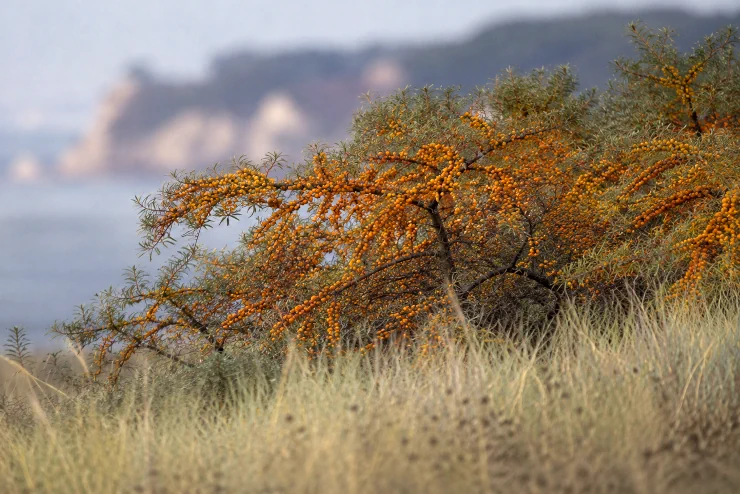
The Baltic wind is not gentle here. It bends trees inland. It pushes sand across paths. It leaves salt on fences and windows. Sea buckthorn does not retreat from these conditions. It grows through them.
Its scientific reputation as a hardy coastal plant is less interesting than watching it in place: branches tangled together, berries glowing against a pale sky, the sound of waves beyond a line of dunes.
The plant belongs to the border between land and water, not fully wild, not fully managed.
From Survival Food to Island Symbol
Older generations on the Baltic coast knew sea buckthorn as a practical plant. Its berries were valued because they lasted into colder months and provided a source of flavour when gardens had gone quiet. Today, the same orange fruit appears on shelves and menus across Rügen.
The shift is subtle. A berry once gathered out of necessity has become part of the island’s identity.
But on the paths outside the villages, the plant remains unchanged. The thorns still catch sleeves. The berries still stain fingers. The wind still moves through the branches.
Rügen’s Autumn Landscape in a Glass
A glass of sea buckthorn juice tastes like the place where it grows.
There is the sharpness of the coast, the bitterness of the peel, the memory of long walks when the beach empties and the holiday crowds disappear. It carries the season when Rügen becomes quieter, when fishermen work in heavier jackets, when bicycles leave fewer tracks in the sand, when the island belongs again to weather and tide.
Perhaps that is why the fruit has lasted as more than a local speciality. Sea buckthorn does not represent an idealised version of Rügen. It represents the actual island: windy, resistant, shaped by conditions it cannot control.
The orange berries simply make it visible.
Planning Your Trip to Rügen
Exploring the island of Rügen is way easier when you have your transport, places to stay, and fun activities all sorted out ahead of time. Planning your travel options like renting a car, grabbing train tickets, or figuring out ferry rides makes getting around a breeze.
Plus, booking your accommodations in advance means you’ll find just the right spot to kick back, whether it’s a beach hotel or a charming little guesthouse.
And don’t forget to plan some cool things to do, whether that’s checking out the stunning chalk cliffs at Jasmund National Park, visiting some historical sites, or trying out the local food.
These trusted platforms can help you arrange everything from accommodation to activities before you arrive on the island:
- Expedia — Find flight deals to Rügen.
- Direct Ferries — Compare ferry routes to Sassnitz.
- Hotels.com — Book places to stay in Germany’s largest island with flexible options.
- Discover Cars — Rent a car at good prices in Germany.
- GetYourGuide — Find top-rated tours and activities on the island.
- Stay22: Explore stays in Rügen with an interactive map.