
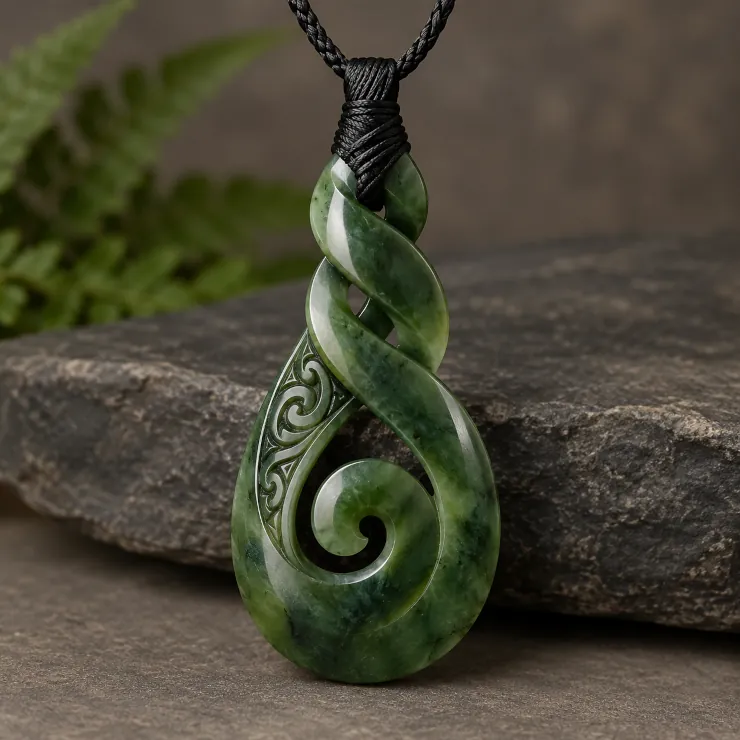
Pounamu, also known as greenstone, is one of the most important materials in New Zealand’s history and culture. It is a hard, beautiful stone found only on the West Coast of the South Island, and for centuries it has held deep meaning for the Māori people.
Long ago, wood-carvers used tools made from pounamu because it was extremely strong. This strength made it perfect for shaping wood, bone, and other hard materials. Without metal tools, early craftsmen relied on stones like pounamu to do difficult, detailed work.
But pounamu was valued for more than just its strength. Its beauty also made it a popular material for carving adornments. Skilled carvers turned the stone into stunning pieces of jewellery and art, each one unique because of the natural patterns inside the stone.
These precious adornments were worn as a sign of prestige. People wore ear pendants, breast pendants, and carved combs in their hair to show status and identity. Many of these pieces, known as taonga (treasures), carried deep meaning and were often passed down through generations.
Even today, pounamu remains a popular choice for jewellery. Modern designers continue to create rings, necklaces, and pendants from the stone, blending traditional Māori patterns with contemporary styles.
Gifting pounamu remains an important tradition today, symbolising respect, love, and connection between people. However, it is a common misunderstanding that pounamu should only ever be received as a gift and never bought for oneself.
In fact, historically, Māori traded pounamu freely, and there is no traditional rule preventing someone from choosing a piece for themselves. Today, it is widely accepted to buy pounamu either as a gift or for personal meaning; what matters most is the respect and intention behind it.
For visitors to New Zealand, learning about pounamu offers a deeper understanding of the country’s history and values. It is not just a stone, but a symbol of strength, beauty, and identity that continues to connect the past with the present, showing how tradition and modern life can exist side by side.