
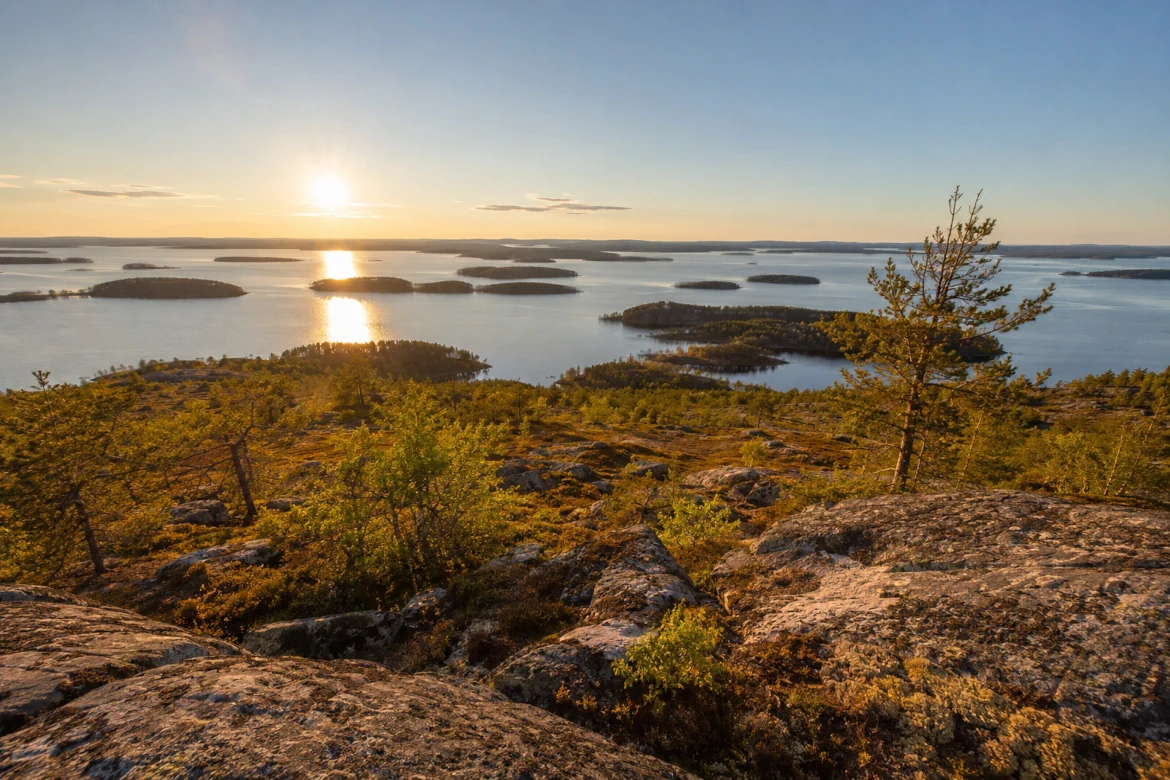
Far above the Arctic Circle lies Lake Inari, one of the most spectacular natural landscapes in northern Europe.
Covering more than 1,000 square kilometers (400 square miles), it is Finland‘s third-largest lake and the largest lake located entirely within a single Finnish municipality. It is also the second-largest subarctic lake in the world, after Canada‘s Great Bear Lake, making it a destination where vast wilderness, peaceful waters, and Arctic beauty come together.
Unlike many famous European lakes crowded with resorts, Lake Inari remains wonderfully unspoiled. You come here for silence, pristine nature, dramatic scenery, and unforgettable landscapes that change with every season.
This page may contain affiliate links.
A Lake with More Than 3,000 Islands
One of Lake Inari’s most fascinating features is its remarkable collection of more than 3,000 islands scattered across the water. Every boat trip reveals rocky islets, forest-covered islands, quiet beaches, and hidden coves waiting to be explored.
Some islands are large enough for hiking and overnight stays, while countless smaller islands provide important habitats for birds and create the lake’s maze-like appearance. This unique geography makes every journey across the water feel different.
Among Lake Inari’s thousands of islands, Ukonsaari is the most famous. Rising from the western part of the lake, it was an important sacred site for the Sámi people for centuries. Archaeological discoveries, including animal bones and antlers, indicate that offerings were made there as part of traditional Sámi spiritual practices, likely connected to hunting and fishing. Today, the island is protected as a culturally significant heritage site and can be easily visited by boat during the summer.
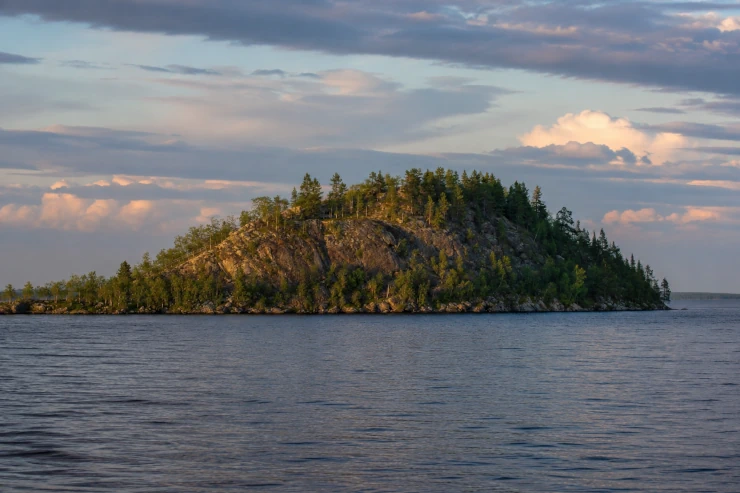
Two other historic burial islands in Lake Inari are Vanha Hautuumaasaari (“Old Graveyard Island”) and Hautuumaasaari. Vanha Hautuumaasaari was used as a burial place in the 18th century. Traces of these early burials can still be seen today in depressions and uneven ground on the island.
In the late 18th century, a new cemetery was established on Hiekkasaari, near Ukonsaari, which later became known as Hautuumaasaari. The island remained in use until the early 20th century, with the last burial taking place in 1904. The isolated location was chosen because wild animals could disturb graves on the mainland.
The islands also have a difficult history connected to archaeological and anthropological excavations. During the 20th century, researchers removed human remains from graves for study, and some remains were later returned and reburied. Together with Ukonsaari, the islands are protected heritage sites, and visitors are encouraged to respect their historical and spiritual significance.
Several other islands in Lake Inari are also worth exploring. Mahlatti, the largest island in the lake, is known for its rugged Arctic scenery. Korkia-Maura Island is home to a 15-meter-long ice cave, reached through a 5-meter tunnel. Thanks to its unique microclimate, the cave used to keep its ice frozen throughout the summer, but now, due to global warming, the ice often melts before the end of the season.

Together with thousands of smaller islands and islets, they create an archipelago-like setting that makes boating one of the best ways to experience Lake Inari. Whether joining a guided excursion or paddling through sheltered waters by kayak, visitors are rewarded with ever-changing Arctic scenery and an extraordinary sense of solitude.
Arctic Nature in Every Direction
Lake Inari lies within a landscape of boreal forests, rolling fells, wetlands, and open wilderness. The area around the lake is slightly warmer and receives less rainfall than many nearby parts of Lapland, giving it a somewhat longer growing season while preserving its distinctly Arctic character.
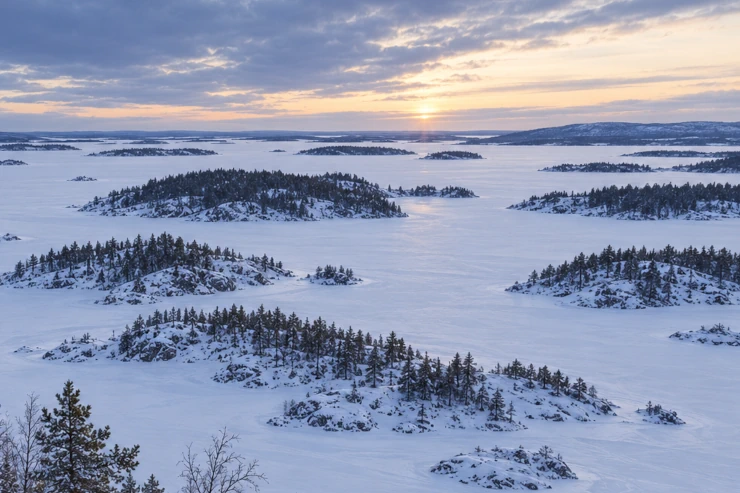
The lake normally freezes from November until early June, transforming into an immense frozen landscape. In summer, long daylight hours allow visitors to enjoy boating, fishing, kayaking, hiking, and wildlife watching almost around the clock.
Autumn paints the forests with brilliant shades of gold, orange, and red, while winter brings snow-covered scenery and excellent opportunities to witness the Northern Lights dancing above the frozen lake.
Rich Wildlife and Excellent Fishing
The clean, cold waters of Lake Inari support a healthy fish population that attracts anglers from around the world. Species commonly found here include Arctic char, trout, lake salmon, whitefish, grayling, perch, and northern pike.
Fishing has long been an important part of life around the lake, and visitors can join guided excursions or enjoy recreational fishing where regulations permit. Local guides know the best seasonal fishing areas while helping visitors respect conservation rules and local traditions.
Wildlife around the shoreline is equally rewarding. Birdwatchers may spot waterfowl, birds of prey, and migratory species, while the surrounding forests provide habitat for reindeer, moose, foxes, and many other animals adapted to the Arctic environment.

Deep Waters and Untouched Landscapes
Although much of Lake Inari is relatively shallow, parts of the lake reach impressive depths of about 92 meters, making it Finland’s second-deepest lake after Lake Päijänne. These deeper basins contribute to the lake’s ecological diversity and help shape its unique cold-water environment.
With thousands of kilometers of shoreline, visitors rarely feel crowded. Instead, they encounter peaceful beaches, rocky shores, quiet forests, and countless scenic viewpoints that showcase the vastness of Finland’s northern wilderness.
An extensive network of wilderness cabins around the lake provides simple shelter for hikers, paddlers, and outdoor enthusiasts exploring this remote region.
Experiences Throughout the Seasons
Every season offers a completely different experience at Lake Inari.
During summer, calm waters are perfect for boating, canoeing, kayaking, fishing, and island hopping. Hiking trails reveal panoramic viewpoints, while the Midnight Sun creates nearly endless daylight for outdoor adventures.
Autumn brings colorful forests, crisp air, and excellent photography conditions. It is also a popular season for fishing and peaceful nature walks.
Winter transforms the lake into a frozen Arctic landscape suitable for snowmobiling, cross-country skiing, ice fishing, and guided Northern Lights excursions.
Spring gradually awakens the forests as snow melts and migratory birds return, offering visitors a quieter time to experience the changing Arctic environment.
Exploring Sámi Heritage
Lake Inari has been closely connected with Sámi culture for centuries. For generations, the lake served as an important source of food, a transportation route, and a place of deep cultural and spiritual significance.
If you’re interested in learning more about Sámi heritage, combine your time on the lake with a visit to Sámi Museum Siida, Finland’s national museum of Sámi culture. Its award-winning exhibitions and open-air museum explore traditional livelihoods, reindeer herding, fishing, handicrafts (duodji), and the close relationship between the Sámi people and the Arctic environment.
Just a short walk away, Sámi Cultural Centre Sajos serves as the cultural and administrative heart of the Sámi in Finland. Home to the Sámi Parliament, Sajos also hosts exhibitions, cultural events, concerts, and guided tours that offer visitors a deeper understanding of contemporary Sámi life, language, and traditions.
Together, these experiences provide valuable insight into Sámi history, storytelling, craftsmanship, and the enduring connection between the Indigenous Sámi people and the unique landscapes of Lake Inari.
Planning Your Lake Inari Adventure
Lake Inari is an excellent destination for travelers seeking authentic Arctic experiences away from busy tourist centers. Whether you’re planning a scenic road trip through Finnish Lapland, a photography holiday, a fishing adventure, or simply a peaceful escape into nature, the lake offers unforgettable landscapes throughout the year.
To organize your entire trip to Finland in one place, these trusted travel platforms can help:
- Expedia — Find the best flight deals.
- Direct Ferries — Compare ferry routes easily.
- Booking.com — Book accommodation with flexible options.
- Discover Cars — Rent a car at competitive prices.
- GetYourGuide — Discover top-rated tours and activities.