
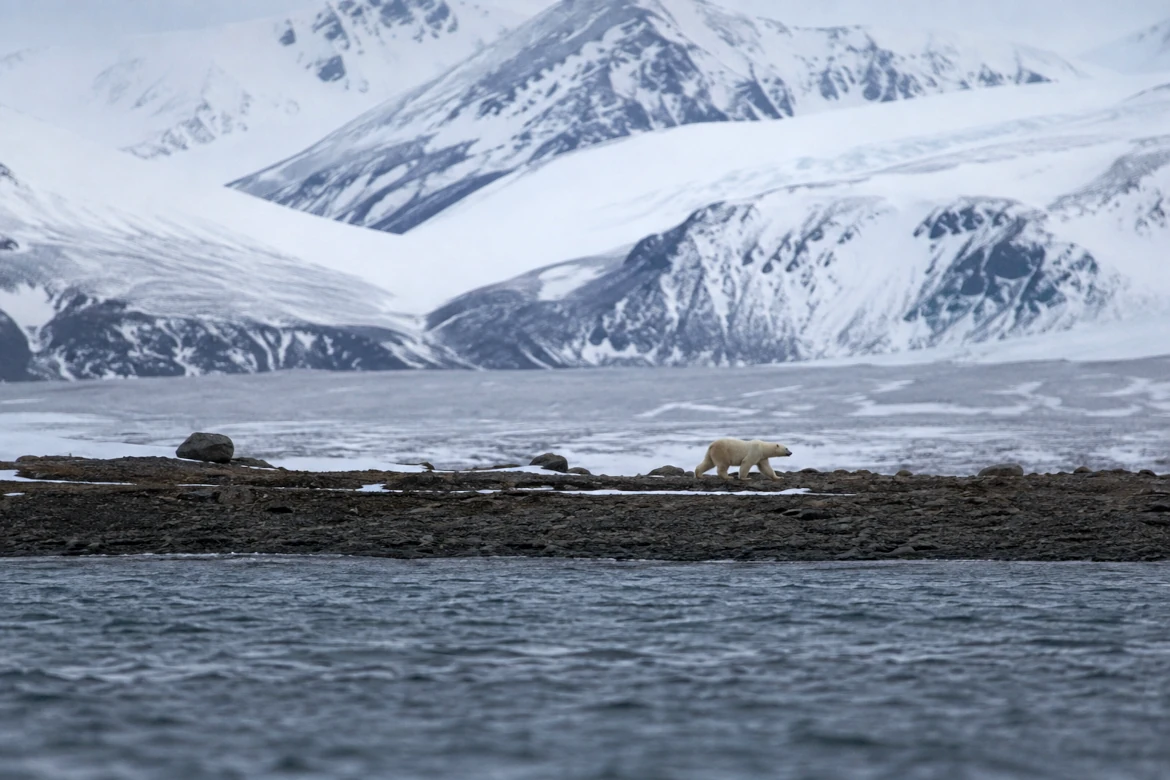
Polar bears in Spitsbergen are one of the main reasons travelers come to Svalbard.
Spitsbergen is the main island of Svalbard. It lies far north of mainland Norway, closer to the North Pole than to Oslo. Every year, more travelers come here to see these huge animals in their natural home.
But polar bears are wild predators, not zoo animals. Seeing one safely takes planning, the right guide, and some basic knowledge. This guide will help you enjoy the trip without putting yourself or the bears at risk.
This page may contain affiliate links.
Why Spitsbergen Is a Top Polar Bear Destination
Svalbard is part of the wider Barents Sea polar bear population. This population has around 3,000 bears. Most of them live on sea ice and in Russian territory. About 300 bears stay on Svalbard all year. Others move between Svalbard and Franz Josef Land.
Svalbard is very remote, so the bears here have had little contact with people. This makes them hard to predict. That’s why the region has strict safety rules, and why visitors are strongly advised to explore outside the settlements with an experienced local guide.
It’s worth knowing that there’s no such thing as an official “polar bear safari” on Svalbard. Local tour companies don’t build trips just to look for bears.
Instead, you join general trips like boat trips, snowmobile tours, ski trips, and if a bear is spotted along the way, your guide will handle it safely. Seeing a bear is possible, but it’s never a guarantee, and that’s exactly how you should think about it.
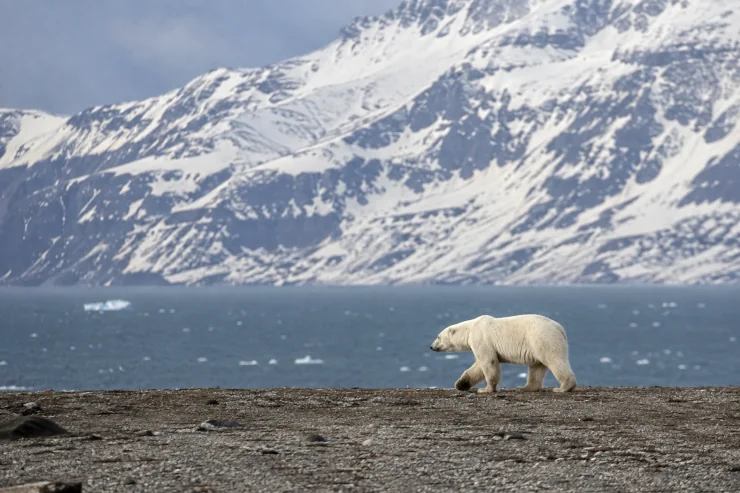
When to Go for the Best Chance of a Sighting
There’s no month that guarantees you will see a polar bear. Sightings depend a lot on sea ice, weather, and where the bears happen to be.
Still, some seasons and trip types give you a better chance. In spring (April to June), the sea ice is often still solid near the coast, and bears hunt seals on it. This is when snowmobile and ski trips are common.
In late summer (August to September), more ice has melted, so boat and ship trips can reach areas that were frozen earlier in the year. Winter (November to February) is mostly dark, so wildlife trips are much less common then, even though bears are still active.
A telephoto lens is your best friend for taking polar bear photos, not your legs.
Choose the Right Way to Explore
You can travel on your own outside the settlements, but this is not easy. You need the right equipment, and you must follow permit and safety rules.
You also need a real plan for what to do if you meet a bear. For most visitors, a trip with an experienced local guide or a well-known tour company is the safest and simplest choice. Here are the main ways to explore:
Boat and ship trips. Small expedition ships and larger cruise ships sail along the coast, mostly in summer. Guides on board watch for bears with binoculars. If a bear is spotted, everyone stays safely on the ship or in a small boat, far away from the animal.
Snowmobile tours. In spring, guided snowmobile trips take visitors across the frozen fjords. These trips move fast and cover long distances. Guides always carry the right safety equipment in case they meet a bear.
Dog sledding and ski trips. These trips focus on the Arctic landscape and wildlife in general. They give you a quieter, slower way to see the region.
For the safest trip, choose an experienced local guide or a well-known tour company that knows Svalbard’s polar bear safety rules.
Svalbard is also starting a new guide approval system. From July 1, 2027, tourist and outdoor activities outside the towns and settlements will need an approved Svalbard guide.
Basic Polar Bear Safety Rules
Polar bears are the top hunters in the Arctic. Unlike brown bears, they can see humans as possible prey. Because of this, Svalbard has strict rules for anyone leaving the settlements.
- Carry the right polar bear protection. Anyone traveling outside the settlements must carry something suitable to scare off a polar bear. The Governor of Svalbard also recommends carrying a firearm for polar bear protection. Loaded firearms are not allowed inside Longyearbyen itself. Weapons must be carried unloaded and clearly empty within the settlement.
- Follow the legal distance rules. Svalbard law sets a minimum distance from polar bears: at least 300 meters from July 1 to February 28, and at least 500 meters from March 1 to June 30. If a bear gets closer than that, you must move back right away.
- Stay inside vehicles or boats when a bear is near. Guides will tell you when it’s safe to step outside.
- If you’re camping, check if you need a permit. A permit from the Governor’s office is required for groups that camp for tourism or outdoor activities. People who live in the area and solo travelers also need permission if they use the same campsite for seven days or more.
- Don’t leave food or trash outside. Bears have a very strong sense of smell and come toward anything that smells like food.
- Follow your guide’s instructions at all times. Experienced Svalbard guides are responsible for managing bear encounters and keeping visitors at a safe distance.
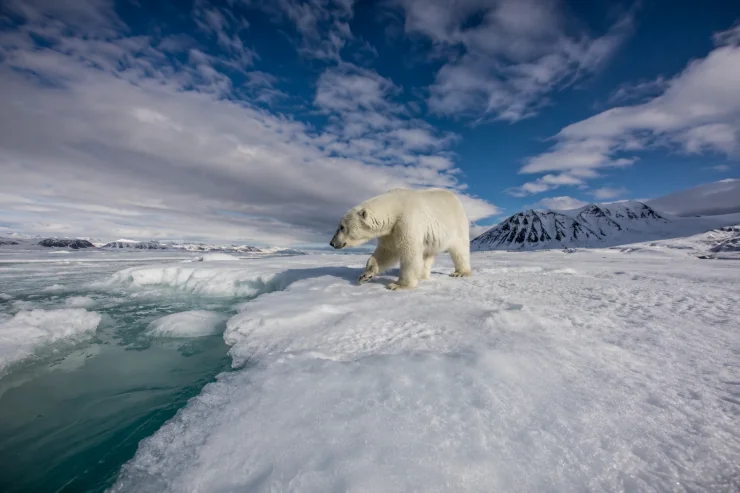
What to Pack for the Trip
Spitsbergen weather changes fast, even in summer. Pack warm, waterproof layers, sturdy boots, gloves, and a hat, even if you visit in July. Bring binoculars or a camera with a zoom lens, since most sightings happen from far away, and it’s also a good chance for birdwatching. Sunglasses help too, since sunlight on snow and ice can be very strong.
Choosing Where to Stay
Longyearbyen is the main town and the starting point for almost every trip. It has hotels, guesthouses, and small lodges, from simple to comfortable. Many visitors stay here and take day trips or multi-day trips from town. Book early if you can, especially in high season, since there are only a limited number of rooms.
Getting There
You can reach Svalbard by air or by sea. There are no regular ferry connections between mainland Norway and Svalbard, but cruise and expedition ships visit the islands, especially during the summer.
SAS flies directly from Oslo and also through Tromsø. Norwegian usually flies directly from Oslo. The flight takes about 3 hours from Oslo and about 1.5 hours from Tromsø.
Svalbard is outside the Schengen Area, so all travelers must carry a valid passport or an accepted national ID and go through an identity check. Norway does not require a visa just to enter Svalbard. But if you need a Schengen visa to travel through mainland Norway, make sure it allows at least two entries.
You will use one entry when traveling from mainland Norway to Svalbard, and the second when you return to the Schengen Area after your trip. Once you land, everything else, including tours, transport, and hotels, is arranged locally or through your booked trip.
Frequently Asked Questions
Can you see polar bears in Spitsbergen? Yes, it’s possible, but it’s never guaranteed. You might see a bear during a boat, ship, or snowmobile trip. It depends on the sea ice, the weather, and where the bears happen to be.
What is the best time to see polar bears in Svalbard? There’s no month when you are guaranteed to see a polar bear. Spring (April to June) and late summer (August to September) can offer better chances, depending on sea ice, weather, and bear locations.
Are polar bear tours safe in Svalbard? Organized tours with experienced local guides are usually the safest and easiest way to explore. Guides know the safety rules, carry the right equipment, and know what to do if a bear is spotted.
How close can you get to a polar bear in Svalbard? By law, you must stay at least 300 meters away from July 1 to February 28, and at least 500 meters away from March 1 to June 30. If a bear gets closer than that, you must move back.
Can you travel independently in Svalbard? Yes, you can travel on your own outside the settlements. But it takes real preparation: the right equipment, following permit and safety rules, and carrying something to scare off a bear if needed. Most visitors choose a guided trip instead.
Do you need a guide to see polar bears in Svalbard? Not always, under the current rules. But an experienced local guide is strongly recommended. Guides know the land, the current safety rules, and how to handle a bear encounter safely.
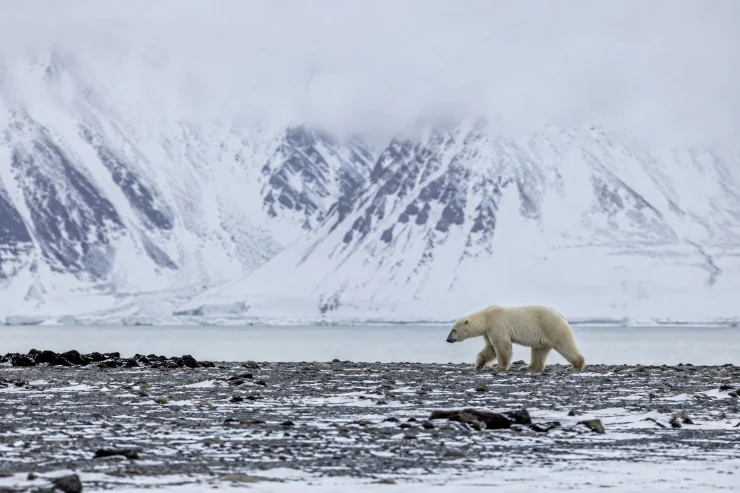
Book Everything in One Place
Planning a trip to Spitsbergen has many parts, from flights to guided tours. These platforms can help you organize it all in one place:
- Expedia — Find good flight deals to Longyearbyen.
- Hotels.com — Book a place to stay, with flexible options.
- GetYourGuide — Find top-rated guided tours, from snowmobile trips to boat tours.
- Discover Cars — Rent a car at a good price to explore the small road network around Longyearbyen. Note: there are no roads between settlements, so a car is optional, not necessary.
- Stay22 — Explore places to stay on an interactive map.