
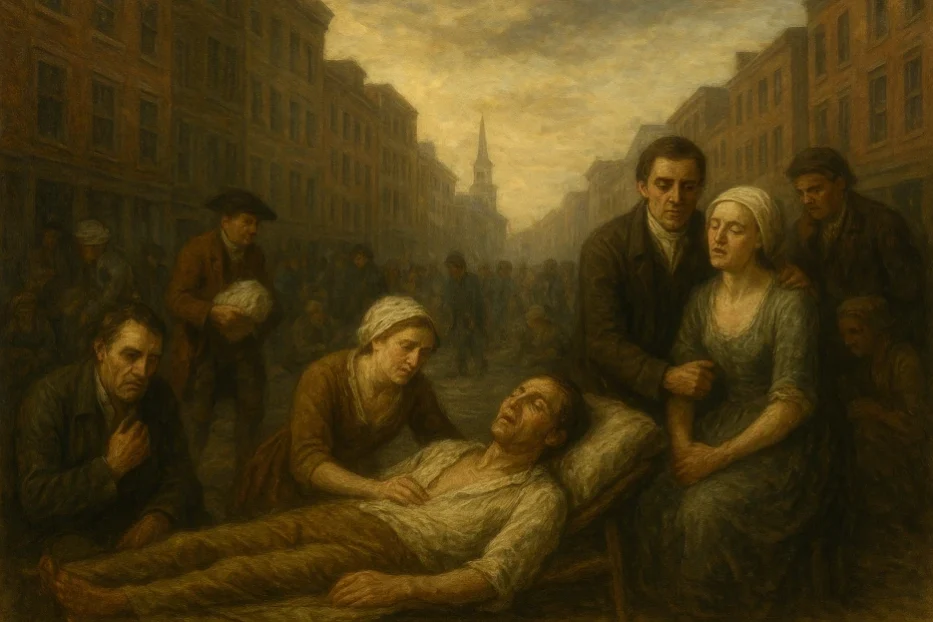
Yellow fever in Manhattan shaped the city in profound ways between 1795 and 1803, repeatedly bringing the young metropolis to its knees as yellow fever outbreaks transformed its neighborhoods, public health systems, and patterns of growth.
Long before skyscrapers crowned its skyline and millions pressed through its streets each morning, Manhattan was a city repeatedly brought to its knees by a disease it scarcely understood.
Between 1795 and 1803, yellow fever in Manhattan swept through New York in a series of devastating waves, turning vibrant neighborhoods into ghost towns, driving residents northward in panic, and forcing early civic leaders to reinvent how a growing city managed health, sanitation, and urban space.
For eight years, fear of “the malignant fever” dictated economic rhythms, social behavior, and even the island’s eventual expansion.
Although these epidemics rarely appear in today’s public memory, their influence is embedded in the very structure of modern New York.
Table of Contents
1795: The First Wave of Fear
When the first major outbreak struck yellow fever in Manhattan in the summer of 1795, no one knew that mosquitoes carried the virus.
Physicians blamed rotting coffee beans, spoiled cargo, stagnant docks, humid air, or the so-called “miasmas” of an unclean city.
This lack of scientific clarity made yellow fever especially terrifying. It seemed to strike at random and with shocking speed. Victims often began with headaches and chills, followed by the sickening yellowing of skin and eyes.
Many vomited black bile, a sign of internal bleeding that usually meant death within hours. Others experienced brief moments of calm before collapsing suddenly and fatally.
In the narrow lanes of Lower Manhattan — where horses clattered over cobblestoned streets, sailors unloaded cargo from Caribbean ships, and families crowded into wooden houses — these symptoms spread panic long before health officials understood their origin.
Panic and Flight in a Crowded Port City
The 1795 outbreak began near the waterfront, the center of Manhattan’s trade-based economy. By July, reports of fever appeared in homes along Water Street, Pearl Street, and the slips crowding the East River.
Within weeks, hundreds were sick. Newspapers tried to reassure readers even as the death toll climbed. Yet the fear was stronger than the official optimism.
Merchants locked their warehouses, families packed carts with whatever belongings they could manage, and a wave of flight surged northward into what was then countryside — places like Greenwich Village, the Bowery, and the outskirts of present-day SoHo.
Wealthier residents crossed the Hudson to New Jersey or boarded boats to Staten Island, believing distance alone would keep them safe.
A New Awareness of a City’s Weaknesses
This first epidemic forced New York’s Common Council to confront a truth long ignored: the city’s infrastructure was collapsing under the pressure of rapid growth.
Streets were choked with refuse, wells were polluted by nearby privies, and the docks where international ships unloaded goods were lined with standing pools of water.
As authorities struggled to isolate the sick and remove the dead, public discussions grew more urgent. New York had to rethink sanitation, waste disposal, and the oversight of arriving vessels.
Still, when winter arrived and the fever retreated, daily life resumed. Many assumed the outbreak was a terrible but isolated event.
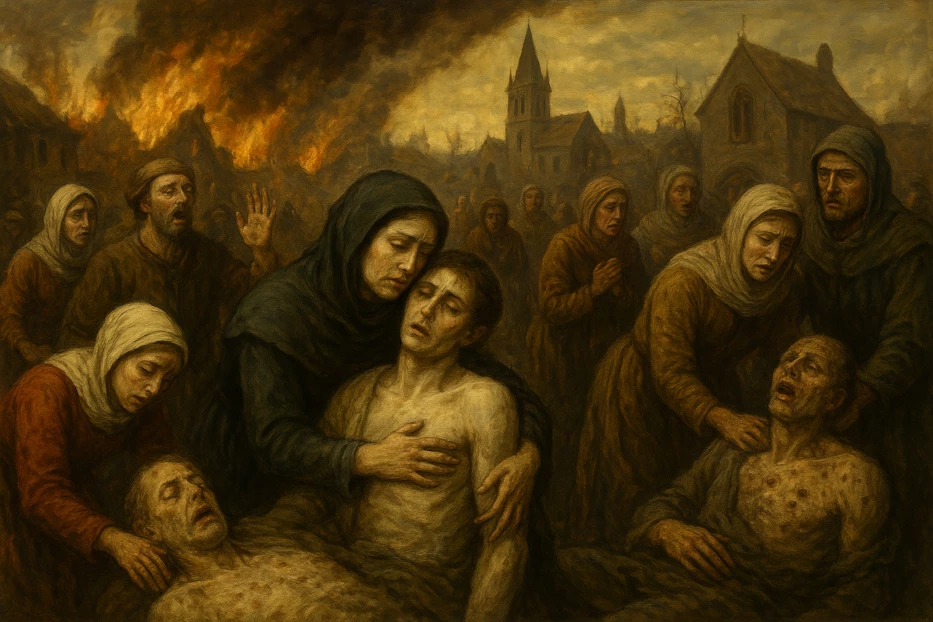
1798: The Catastrophe That Changed Everything About Yellow Fever in Manhattan
They were wrong. The epidemic that erupted in 1798 dwarfed the earlier crisis. Heat blanketed the island that summer, creating ideal conditions for mosquitoes.
The fever returned with a ferocity that stunned even those who remembered 1795. Manhattan’s population hovered around 35,000, yet an estimated two thousand people died in just a few months.
The city’s commercial heart, clustered near the East River, became a wasteland of shuttered shops and abandoned homes. Grass grew in streets normally filled with wagons. Churches held funeral services from dawn until dusk.
Bells tolled so often that officials ordered limits, fearing the constant ringing intensified public panic.
A Turning Point for Public Health in New York
This second epidemic was so severe that many historians rank it alongside Philadelphia’s 1793 outbreak as one of the deadliest in early American history.
Its impact stretched far beyond the immediate casualties. Bellevue Hospital, then a modest almshouse, expanded dramatically to care for the sick.
New York’s Health Committee gained powers that foreshadowed the modern Department of Health. Quarantine stations were established on nearby islands to screen arriving ships and isolate anyone suspected of carrying infection.
The 1798 catastrophe cemented the idea that New York could not rely on ad-hoc responses; it needed permanent, structured systems to manage disease.
1803: The Fever’s Final Assault
Still, yellow fever was not finished with Manhattan. In 1803, another major outbreak erupted along the familiar corridors of the Lower East Side.
By now, residents recognized the early warning signs: unexplained fevers near the docks, sudden evacuations of crowded tenements, and newspaper editorials urging calm despite mounting alarm.
The summer brought a heavy toll. Hundreds died; thousands fled northward in search of clean air. The city’s handling of the crisis improved compared to earlier epidemics, but the recurring nature of the disease deepened public frustration.
For many, it was no longer possible to believe Manhattan’s southern tip was safe or healthy during hot months. The seasonal rhythm of fear — the question of whether the fever would return each summer — became a defining feature of life.
How Yellow Fever Pushed the City Northward
These recurring epidemics triggered a profound geographic shift. Year after year, residents who fled the lower wards during outbreaks discovered they preferred the cleaner air and open spaces of neighborhoods farther uptown.
Some returned after the fever passed, but many did not. This steady movement helped seed the long-term northward expansion of the city.
When the Commissioners’ Plan of 1811 introduced Manhattan’s iconic street grid, the areas once considered rural refuges were already growing due in part to the footprint left by these earlier migrations.
Yellow fever, more than any other force of the time, pushed New Yorkers to reconsider where and how they lived.
Sanitation Becomes a Matter of Survival
The epidemics also transformed public expectations regarding sanitation. The link between disease and filth may not have been fully understood, but the correlation was impossible to ignore.
Streets were repaved and widened. Regulations were introduced to reduce standing water and enforce dock cleanliness. The city invested in improved drainage, garbage collection, and more systematic oversight of markets and slaughterhouses.
These innovations — rudimentary as they seem today — laid the groundwork for New York’s later achievements in public health, including its groundbreaking water systems and waste management infrastructure.
The Human Story Behind the Crisis
There was also a deeply human dimension to the yellow fever years that shaped the city’s social fabric.
Accounts from the time describe volunteers who risked their lives nursing strangers, ministers who stayed behind to comfort the dying, and free Black New Yorkers who stepped forward as caregivers when others fled — mirroring the heroism of Philadelphia’s Black community during its 1793 epidemic.
Their contributions, often overlooked in official records, were essential to the city’s survival. Meanwhile, doctors argued fiercely over the cause of the disease.
Some insisted it was imported from the tropics, arriving in the holds of ships. Others believed it arose from local filth. Treatments ranged from bloodletting and mercury-based medicines to herbal teas and vinegar fumes.
With the benefit of modern hindsight, many of these methods appear desperate and misguided, yet they reveal the intense struggle to understand a threat that defied all available knowledge.
The Long Decline of a Terrifying Enemy
By the time the 1803 outbreak subsided, yellow fever’s power over Manhattan had begun to wane.
Improvements in sanitation helped reduce mosquito habitats, cooler summers provided a reprieve, and the expanding city shifted its population away from the densest, most vulnerable zones.
Outbreaks continued sporadically into the 1820s, but they were rarely as destructive as those of the late 18th century. Even as the disease faded, its imprint remained.
A Legacy Hidden in Plain Sight
The yellow fever epidemics from 1795 to 1803 played a crucial role in shaping New York’s identity as a city that confronts crisis through reinvention.
They demanded new approaches to governance, inspired major advances in public health, and transformed the island’s geography. They revealed the fragility of urban life while strengthening the resolve of a community determined to endure.
Today, few walking through the bustling streets of Lower Manhattan realize they are treading upon the epicenter of one of America’s most frightening public health battles.
Yet every paved road, every park carved from former marshland, and every public health law shaped in the decades that followed carries an echo of that forgotten era — when yellow fever in Manhattan changed the future of the nation’s largest city.