
 Islands Around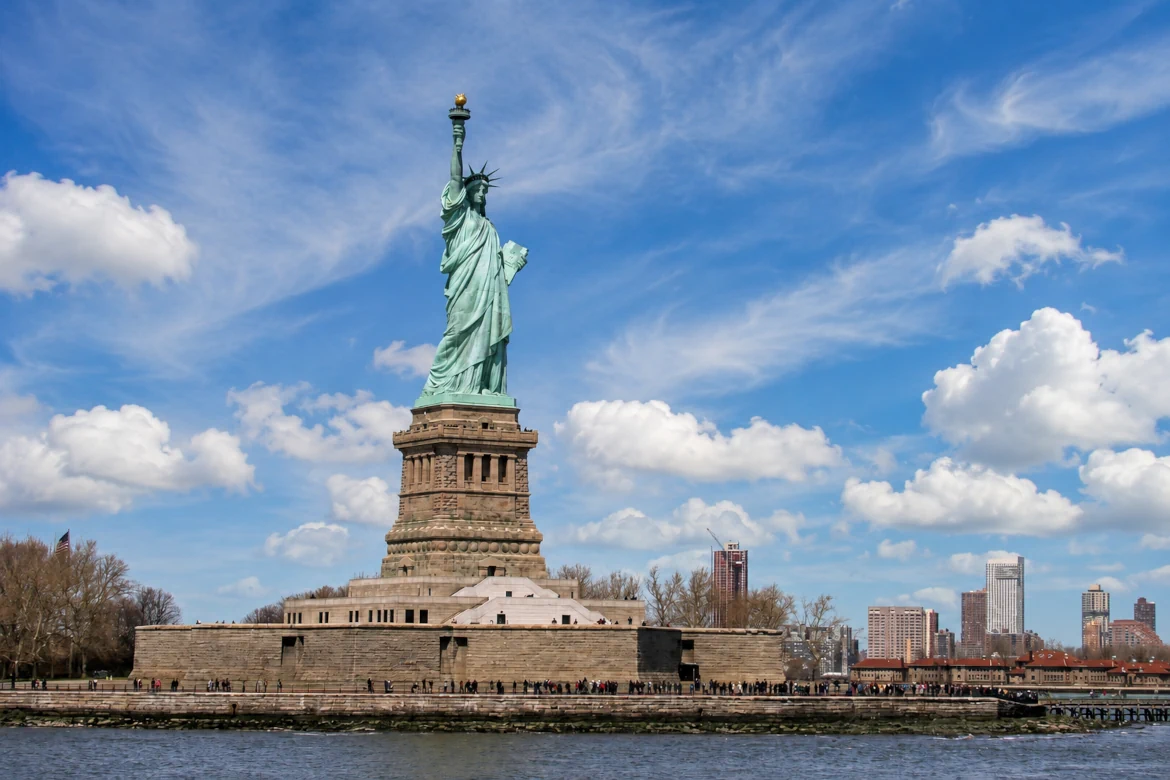
Millions of visitors sail out to see the Statue of Liberty every year, yet few of them know that the small island beneath her feet, now called Liberty Island, spent centuries being used for exactly the opposite of what she now represents.
This page contains affiliate links, which may earn us a small commission.
Long before any statue stood there, local Indigenous communities knew the island simply as Minnissais, meaning lesser island.
Dutch and later English colonists took it over, and by the 1700s the city of New York had turned it into a quarantine station, where incoming ships were inspected and anyone suspected of carrying disease, particularly smallpox, was kept isolated from the mainland.
During the American Revolution, the island’s role became darker still. It was used to hold Tory sympathisers, colonists who had remained loyal to the British crown, effectively imprisoning people for their political allegiance at the very moment the country was fighting for its own liberty.
By the early 1800s, the island had become a military stronghold. Engineers built Fort Wood, an eleven-pointed star-shaped structure that could ring the harbour with cannon fire, finished just in time for the War of 1812.
For decades, the fort stood ready for battle, guarding the harbour against enemy ships. During the Civil War, it also held over 100 prisoners of war within its granite walls: a place built to keep enemies out, not to welcome anyone in.
When France gave the United States a colossal statue of liberty in the 1880s, it was placed directly on top of the old fort’s stone walls, which still form the base of the pedestal today.
Visitors climbing up to the statue are, without realising it, standing on the remains of a structure built for war and confinement. The island itself was still called Bedloe’s Island until 1956, when it was officially renamed Liberty Island, nearly seventy years after the statue itself first arrived.