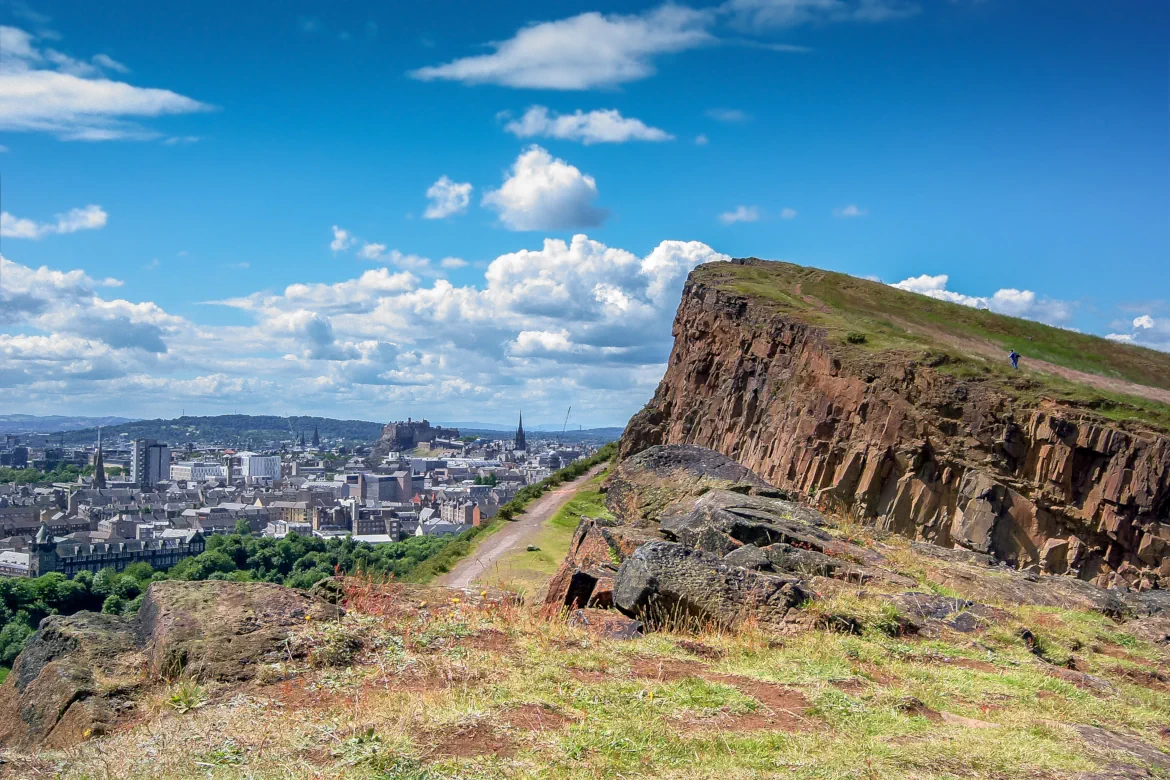
For centuries, Salisbury Crags, the long, sheer cliff line running below Arthur’s Seat in Edinburgh, were not a protected landmark. They were a source of stone.
This page contains affiliate links, which may earn us a small commission.
Quarrying began as early as the 16th century, supplying rock for Holyroodhouse itself, and continued quietly for generations without much objection.
That changed in the early 19th century. The quality of the dolerite made it valuable for paving streets, and demand grew far beyond Edinburgh. The Earl of Haddington, who held the hereditary right to manage the park, opened a new quarry specifically to cut stone for pavements in London.
Blasting and pickaxes tore into the cliff face at a much greater scale than before, and the crags began visibly changing shape.
Local outrage followed. Residents took the matter to court in 1819, arguing that a natural landmark was being destroyed for profit. The case dragged on for over a decade and eventually reached the House of Lords, which ruled in 1831 that the Earl had no right to keep removing stone from the park.
The quarrying finally stopped for good. The Earl’s son, who inherited the title, lost the hereditary role as keeper of the park, though he later received a large sum in compensation.
There is an unexpected twist to this story. The very quarrying that nearly disfigured Salisbury Crags also cut into the rock face and exposed a section geologists now call Hutton’s Section, the clearest evidence James Hutton used to show that molten rock had forced its way into older, solid layers of stone. Without the quarry cuts, that evidence would have stayed hidden.