
 Islands Around
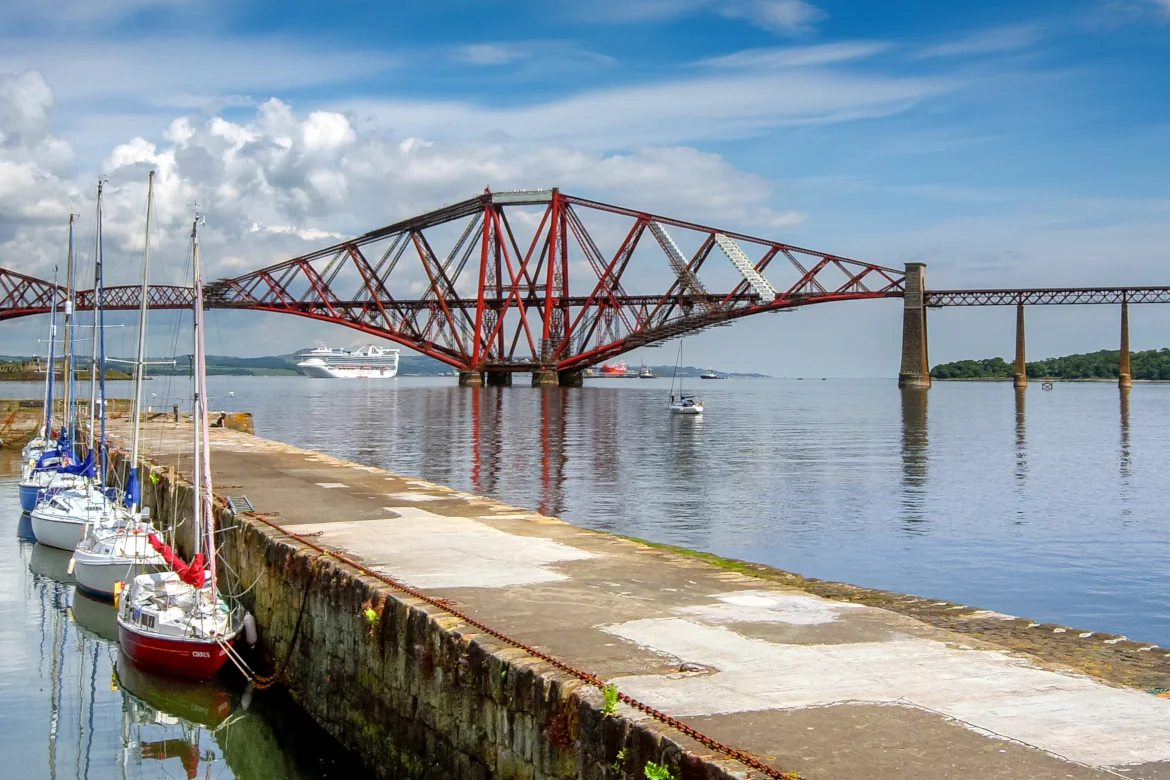
In the late 1880s, two of Europe’s most ambitious structures rose at the same time. In Paris, workers assembled the Eiffel Tower from wrought iron, a material engineers understood well and trusted completely. In Scotland, a very different choice was being made.
This page contains affiliate links, which may earn us a small commission.
The Forth Bridge became the first major structure in Britain built from steel. At the time, this was a bold decision.
Steel had only recently become available in large quantities, thanks to new industrial processes developed in the decades before. It was stronger than iron for its weight, but it had never been tested on anything close to this scale.
The numbers involved were enormous. About 50,000 tonnes of steel went into the bridge, brought in from steelworks in Wales and Scotland. Workers used more than 6 million rivets to hold it all together.
Engineers John Fowler and Benjamin Baker designed the structure using three huge cantilevers, a shape that could handle the weight and stress of heavy freight trains crossing high above the water.
Even with a bold new material, the engineers took no chances with the design itself. Just several years earlier, a bridge over the Firth of Tay, not far away, had collapsed in a storm, killing everyone on board a passing train.
Investigators blamed poor design, construction, and maintenance, and the disaster made wind a central concern for every bridge builder that followed. The Forth Bridge was designed to withstand powerful wind loads, and nobody involved wanted to repeat that mistake.
Steel offered greater strength for its weight, which mattered over spans of this length. The bridge opened in 1890, and more than a century later it still carries trains across the Firth of Forth every day, proof that the engineers’ gamble on an unproven material paid off.